It seems we can’t find what you’re looking for. Perhaps searching can help.
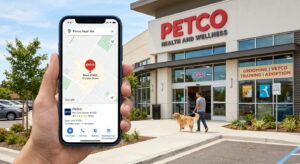
When American consumers query high-intent phrases like “Petco near me” in search engines, they are rarely conducting superficial research. In digital marketing and retail analytics, this specific query represents a high-conversion micro-moment. The consumer is demonstrating immediate transaction intent—whether that involves picking up essential prescription dog food, securing emergency flea medication, or finding a local grooming facility before the weekend. In the modern Omni channel retail paradigm, local search intent serves as the primary bridge connecting virtual browsing to brick-and-mortar foot traffic.
Search queries incorporating the modifier “near me” have experienced logarithmic growth over the past decade. Mobile device location protocols automatically append geographic coordinates to search requests, forcing algorithms to weigh proximity, operating hours, service offerings, and real-time product inventory higher than broad brand domain authority. Consequently, for a query like “Petco near me,” search engines prioritize localized landing pages, Google Business Profiles, and structured local store directories over generic corporate homepages.
Understanding this behavior requires breaking down user intent into three distinct operational buckets:
Immediate Tactical Needs: Urgent purchasing requirements such as specialty dietary meals, aquarium water conditioners, or physical pet restraint harnesses.
Scheduled Service Appointments: Consumers looking for available grooming slots, veterinary clinic hours, or dog training class schedules within a reasonable driving radius.
Exploratory Local Adoption: Families seeking weekend adoption events, interactive pet visits, or specialized live animal departments (such as freshwater aquatics or small reptiles).
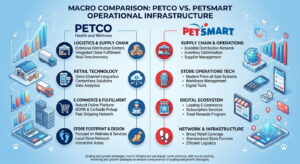
The specialty pet retail market in the United States is primarily anchored by two legacy giants: Petco Health and Wellness Company, Inc. and PetSmart LLC. While both brands capture the vast majority of physical pet supply transactions across North America, their store footprint, operational philosophies, and service architectures feature distinct differences. Understanding these differences helps consumers evaluate search results when searching for local stores.
Petco operates approximately 1,500 locations across North America, positioning itself firmly as a health and wellness destination for pets. In recent years, Petco rebranded its physical stores as “Pet Care Centers,” reflecting a strategic pivot toward holistic health, premium nutrition, and integrated veterinary services. Conversely, PetSmart operates a slightly larger footprint of over 1,650 stores. PetSmart’s physical locations are frequently larger in square footage, designed to accommodate expansive boarding facilities alongside full-scale retail and adoption centers.
| Metric / Category | Petco (petco.com) |
PetSmart (petsmart.com) |
|---|---|---|
| Primary Web Domain | [www.petco.com](https://www.petco.com) |
[www.petsmart.com](https://www.petsmart.com) |
| Store Locator Portal | stores.petco.com |
stores.petsmart.com |
| US Store Footprint | ~1,500 Pet Care Centers | ~1,650 Superstores |
| In-House Vet Model | Vetco Total Care & Vetco Clinics | Banfield Pet Hospital Partnerships |
| Boarding Facilities | Partnered / Select Locations | PetsHotel & Doggie Day Camp |
| Loyalty Architecture | Petco Perks / Vital Care Premier | Treats Rewards |
Both corporate entities compete intensely for geographic supremacy. When a consumer searches for a store, local search engines calculate exact mileage, traffic metrics, and service availability. While Petco frequently captures consumers seeking boutique, high-end wellness formulas and veterinary care, PetSmart frequently attracts pet owners seeking consolidated services like overnight boarding and broad retail selection.
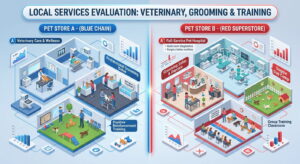
Modern pet retail centers function as comprehensive service hubs rather than simple product warehouses. When consumers execute local search queries, they are frequently evaluating specific on-site service capabilities. Both Petco and PetSmart have invested heavily in expanding these service models to increase customer lifetime value and drive recurring store visits.
Petco operates a dual-model veterinary ecosystem. For comprehensive healthcare, Petco features Vetco Total Care, full-service hospitals built directly inside Pet Care Centers, equipped for surgeries, dental procedures, and advanced diagnostics. Complementing these hospitals are Vetco Clinics—mobile, pop-up vaccination stations that offer affordable, routine preventative care, vaccinations, and microchipping on specific days of the week. PetSmart counters this infrastructure through its partnership with Banfield Pet Hospital, along with expanding independent veterinarian networks under the PetSmart Vet Health initiative. Banfield operates as a permanent, full-service hospital inside hundreds of PetSmart locations nationwide.
Grooming services are a major source of recurring revenue for both retailers. Petco and PetSmart employ certified pet stylists who provide full-service baths, breed-specific haircuts, nail trimming, ear cleaning, and teeth brushing. Additionally, select Petco locations offer self-service dog wash stations, supplying owners with elevated tubs, professional shampoos, and high-velocity dryers for a clean DIY experience.
Both chains feature dedicated dog training facilities staffed by certified positive-reinforcement trainers. They offer structured curricula ranging from Puppy Basics and Intermediate Obedience to CGC (Canine Good Citizen) prep and Therapy Dog training. However, PetSmart holds a strategic advantage in board-based care. Many flagship PetSmart superstores feature PetsHotel facilities, which offer overnight boarding, 24/7 care, and Doggie Day Camp socialization programs—a service model Petco generally leaves to third-party partnerships.
When a user types “Petco near me” into a web browser, complex digital infrastructure goes to work behind the scenes. Both petco.com (via its dedicated sub-domain stores.petco.com) and petsmart.com (via stores.petsmart.com) rely on localized data structures. These web architectures utilize Schema.org structured data, dynamic geo-fencing, and API endpoints to communicate directly with search engine web crawlers.
The local store locator interface functions by querying a database of relational attributes. Below is a conceptual breakdown of the data fields executed during a store locator query:
Unique Location Identifier: Store number and regional cluster node.
Geographic Coordinates: Precise latitude, longitude, and zip-code centroid boundaries.
Operational State: Real-time status (Open, Closed, Special Holiday Hours).
Inventory Feed Integration: Live SKU counts for Buy-Online-Pick-Up-In-Store (BOPIS).
Service Availability Matrices: Flagged indicators for Vetco, Banfield, Grooming, and Grooming Slot Availability.
By embedding rich schema markups directly into HTML source codes, both brands ensure their physical locations rank high in search engine “Map Packs.” When consumers search for nearby stores, this structured data powers the interactive map interfaces, phone numbers, customer reviews, and driving directions displayed on mobile screens.
The modern consumer journey rarely follows a single linear path. The query “Petco near me” is often the first step in a multi-channel purchase process. Modern retail survival requires seamless integration between e-commerce web portals and physical store inventory. Both Petco and PetSmart have developed advanced omnichannel logistics networks to meet changing consumer expectations.
Key fulfillment models available across localized store networks include:
Curbside and In-Store Pickup (BOPIS): Customers can purchase products on petco.com or petsmart.com and select their nearest store location at checkout. Within one to two hours, store associates pick the items directly from retail shelves, stage them at the front register, or carry them out to the customer’s vehicle upon arrival.
Same-Day Local Delivery: By partnering with third-party delivery platforms (such as DoorDash, Instacart, and Shipt), both retailers offer same-day home delivery. Orders are fulfilled directly from local store inventory rather than distant distribution centers, bridging the gap between local retail footprints and online convenience.
Autoship and Automated Subscriptions: Repeat orders for consumables like dog food, cat litter, and prescription medications can be scheduled for recurring delivery. To keep customers loyal to their local brand ecosystem, both companies offer discounts (often 35% or more on initial orders) for setting up automated delivery.
Ultimately, a search for “Petco near me” opens the door to a complex ecosystem designed to support modern pet care. Whether you choose Petco or PetSmart often comes down to your immediate priorities and specific pet care needs. Petco excels as a specialized wellness hub, offering integrated medical care through Vetco Total Care alongside premium nutrition and aquatics programs. PetSmart, meanwhile, stands out for its wide range of services, including dedicated boarding facilities, Doggie Day Camp, and long-standing partnerships with Banfield Pet Hospitals.
As both industry leaders continue to innovate their digital architectures and local store networks, pet owners benefit from unmatched convenience, expanded health services, and faster fulfillment options. By understanding how to navigate these local store networks and service offerings, pet parents can easily find the best care, products, and support for their companion animals right in their neighborhood.
It seems we can’t find what you’re looking for. Perhaps searching can help.