How to care for a Pet Turtle | Pet care
How to care for a pet turtle depends on its species, age, size, and natural habitat. For common aquatic pet turtles, good care starts with a properly sized tank, clean and filtered water, a dry basking area, appropriate heat, UVB lighting, and a species-appropriate diet.
This beginner-friendly guide explains the basics of pet turtle care, including tank setup, water temperature, UVB lighting, basking, feeding, cleaning, handling, and common health concerns.
Important: Turtle requirements vary by species. Red-eared sliders, painted turtles, map turtles, box turtles, and other species do not all have identical housing, temperature, humidity, or dietary needs. When in doubt, confirm the requirements for your turtle’s species with a reptile veterinarian.
What Does a Pet Turtle Need?
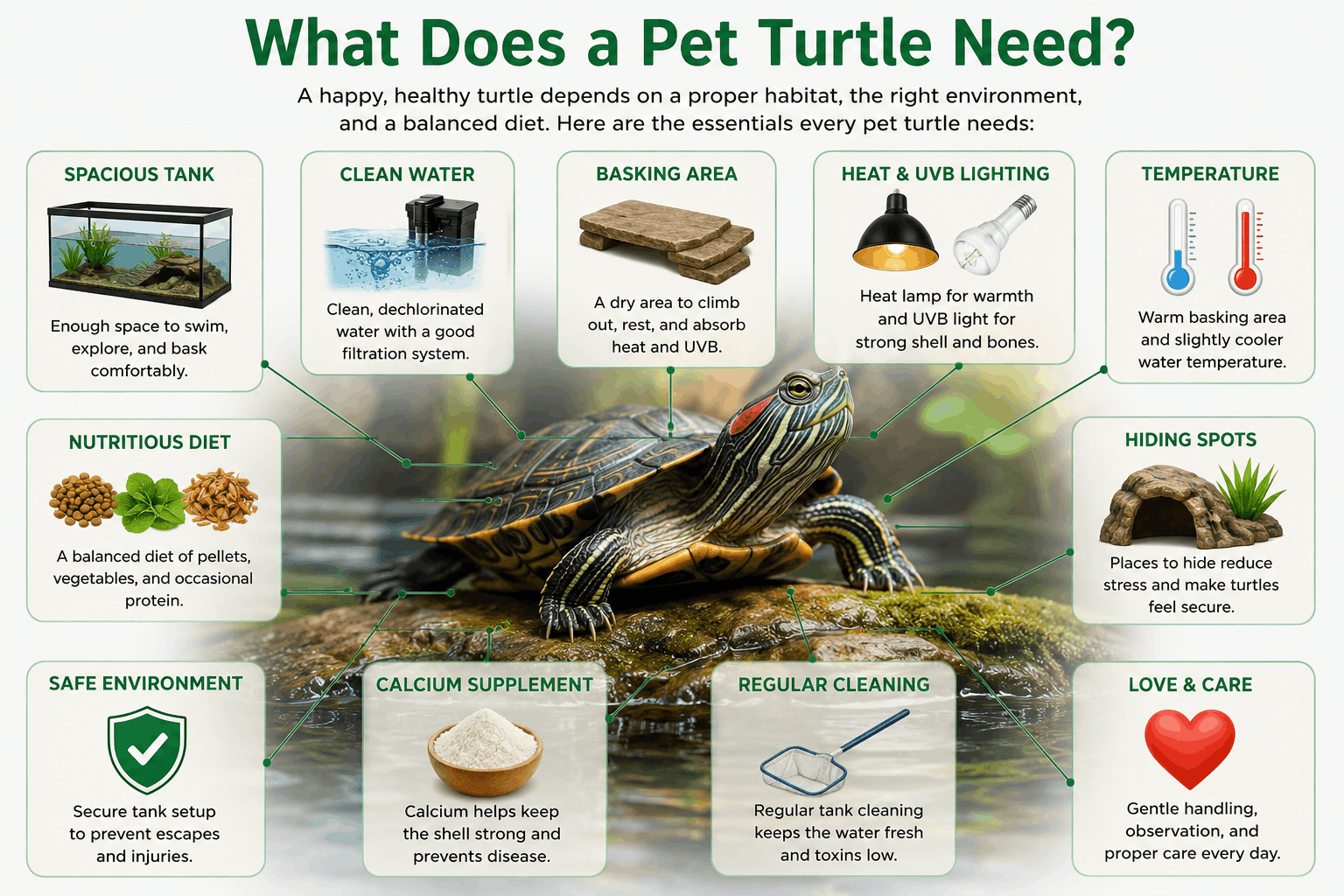
Before bringing a turtle home, prepare its habitat rather than improvising after arrival.
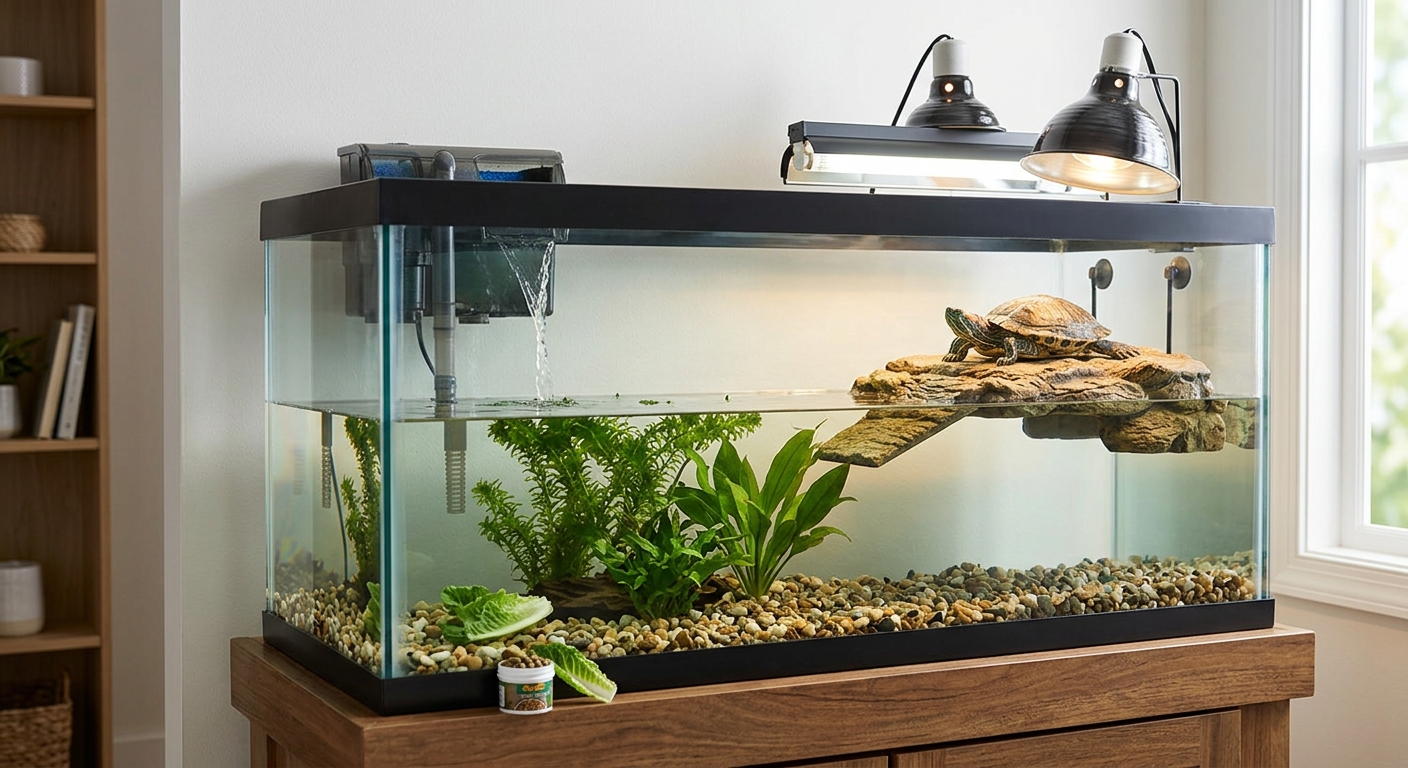
A typical aquatic turtle setup needs:
- A large aquarium or suitable enclosure
- Clean, filtered water
- A secure dry basking platform
- A heat source
- A UVB light
- Reliable thermometers
- A suitable water heater when required
- Species-appropriate turtle food
- Safe decorations and hiding areas
- A regular cleaning routine
Aquatic turtles need enough water to swim, a dry area where they can completely leave the water, appropriate heat, and UV lighting.
Choose the Right Turtle Habitat
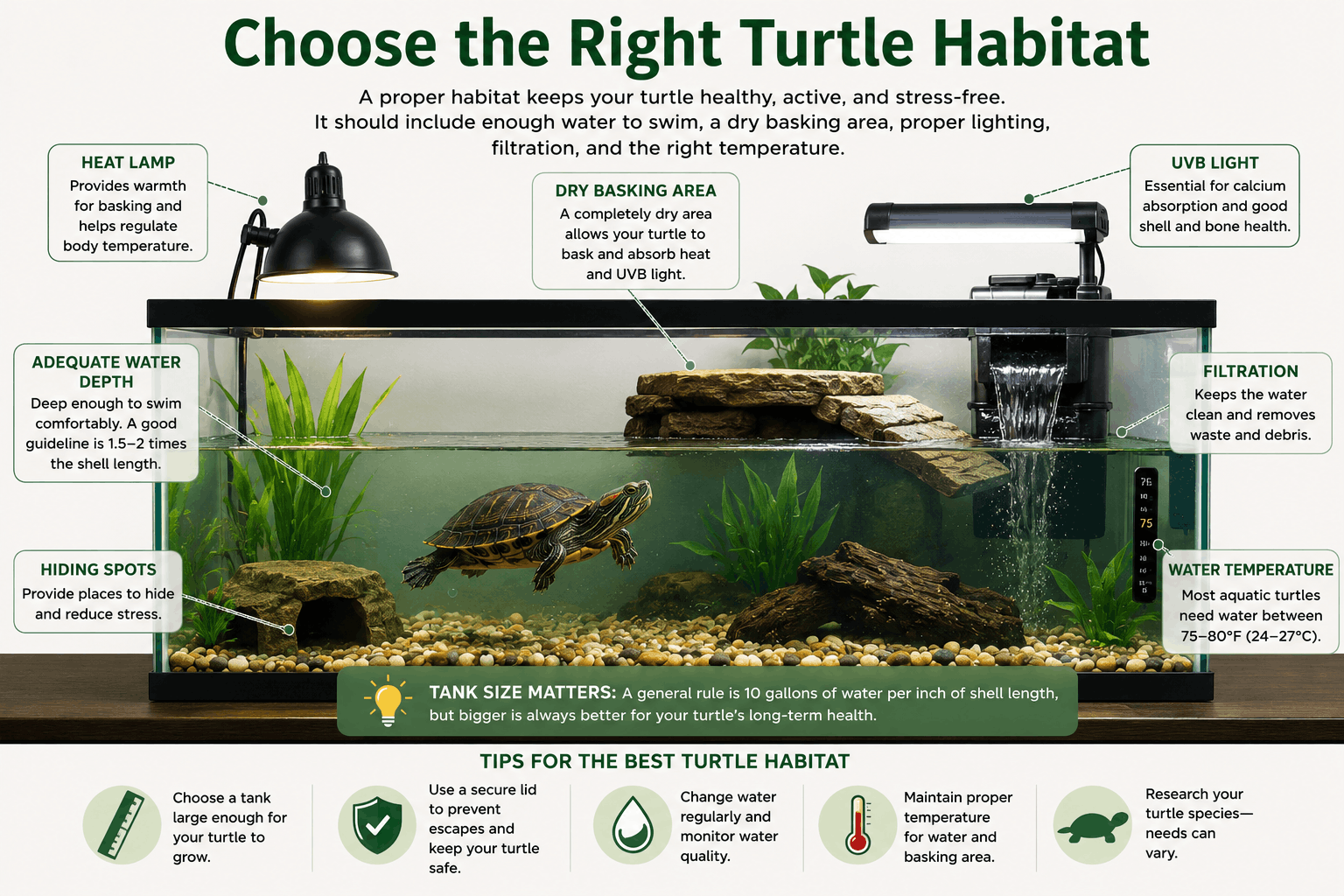
The enclosure is one of the most important parts of caring for a pet turtle.
Aquatic turtles generally need considerably more space than new owners expect. The enclosure should allow the turtle to swim comfortably and provide enough room for a completely dry basking area.
Some commonly used guidelines suggest water depth of approximately 1.5–2 times the turtle’s shell length, with swimming-area length around 4–6 times shell length. Another commonly cited guideline is approximately 10 gallons of water per inch of shell length, although actual needs depend on species, size, filtration, and enclosure design.
Give Your Turtle Enough Swimming Space
Do not choose a tiny aquarium simply because your turtle is small today.
Turtles grow, and upgrading repeatedly can become expensive. A larger enclosure also gives you more room to create separate swimming, basking, and temperature zones.
Provide a Secure Basking Platform
Your turtle should be able to climb completely out of the water.
The basking platform should:
- Be stable
- Be large enough for the entire turtle
- Stay completely dry
- Have an easy-to-use ramp
- Be positioned under the heat and UVB lighting
- Prevent the turtle from becoming trapped
Maintain Clean Turtle Tank Water
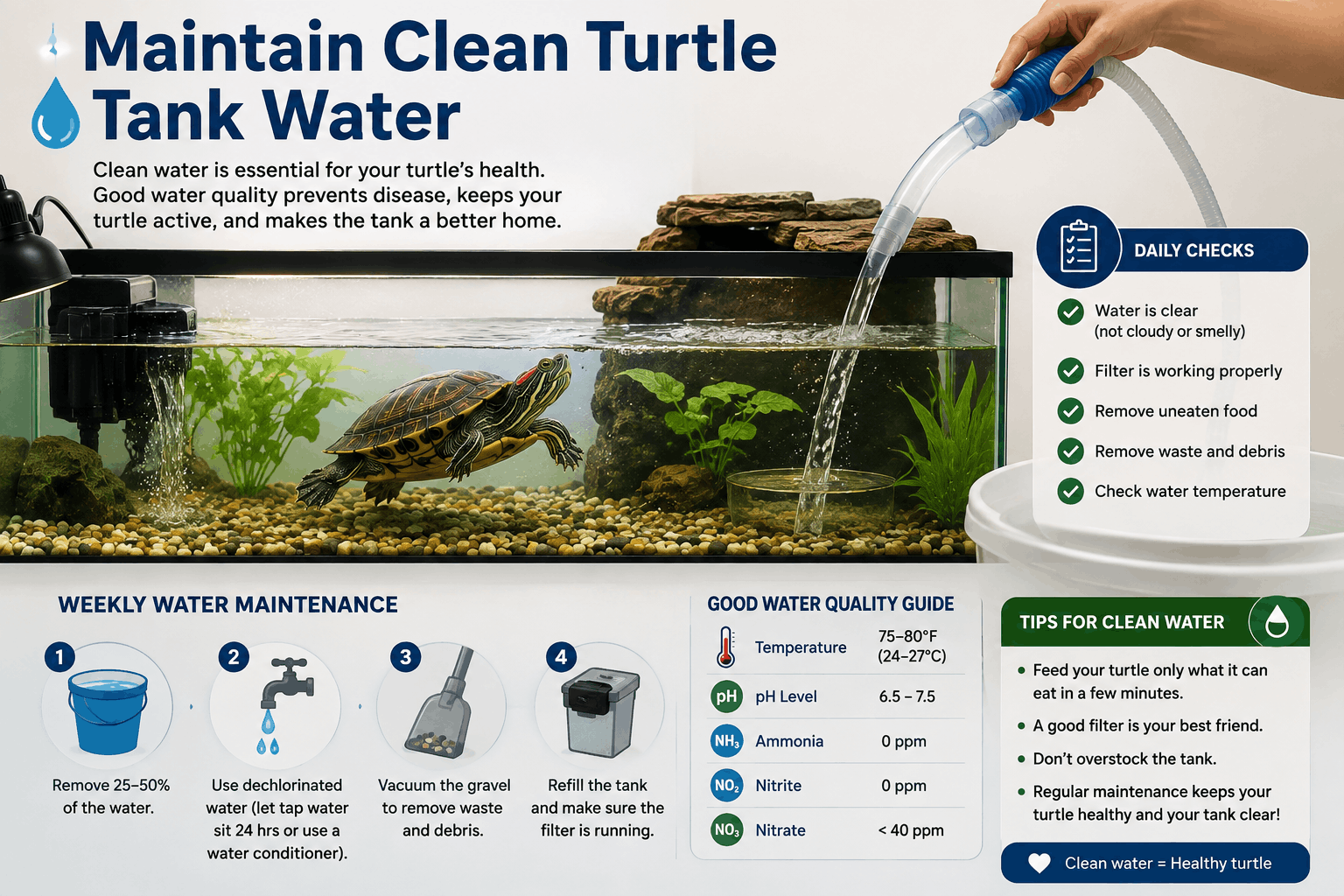
Clean water is essential to good turtle health.
Aquatic turtles eat and eliminate waste in the same water, so their tanks can become dirty quickly. Water should be changed regularly, with the frequency depending on tank size, filtration, turtle size, and water quality.
Use a Proper Filter
A good filtration system helps remove:
- Food particles
- Waste
- Debris
- Cloudiness
- Organic buildup
Choose filtration appropriate for the size of the aquarium and the amount of water being filtered.
A filter does not mean you never need water changes. Regular water changes and filter maintenance remain important.
Test the Water Regularly
Monitor water quality rather than judging it only by appearance.
Depending on the setup, useful measurements can include:
- Temperature
- Ammonia
- Nitrite
- Nitrate
- pH
If you’re unsure about your turtle’s water requirements, ask a reptile veterinarian about the appropriate parameters for the species.
Keep the Water at the Right Temperature
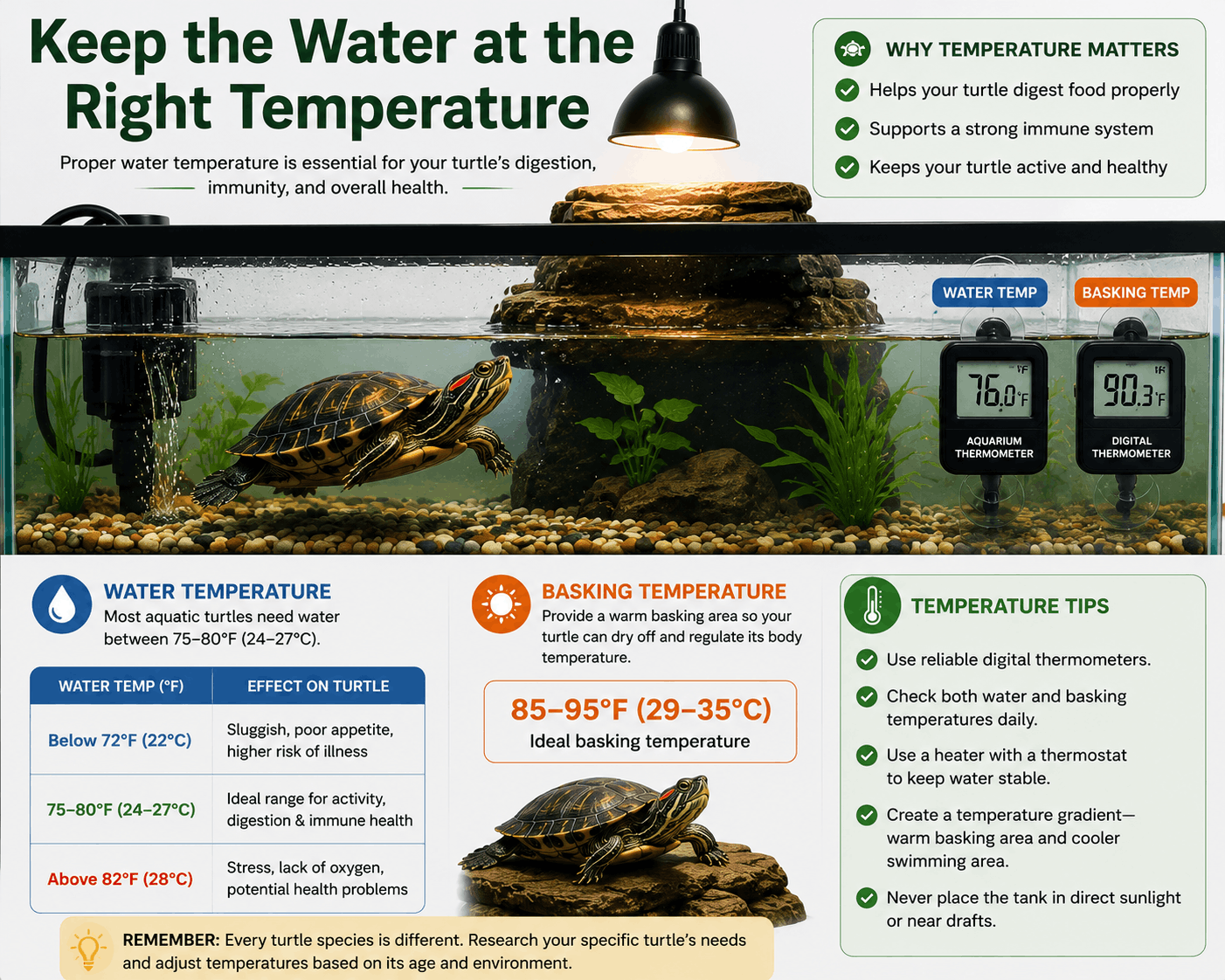
Temperature is another major part of pet turtle care.
Aquatic turtle requirements vary by species and age. Many commonly kept aquatic turtles have water temperatures in the mid-70s°F, but the correct temperature should be based on your turtle’s species and life stage.
Use a Reliable Thermometer
Check the water temperature regularly with a suitable aquarium thermometer.
Don’t estimate the temperature by touching the water.
Provide UVB Lighting
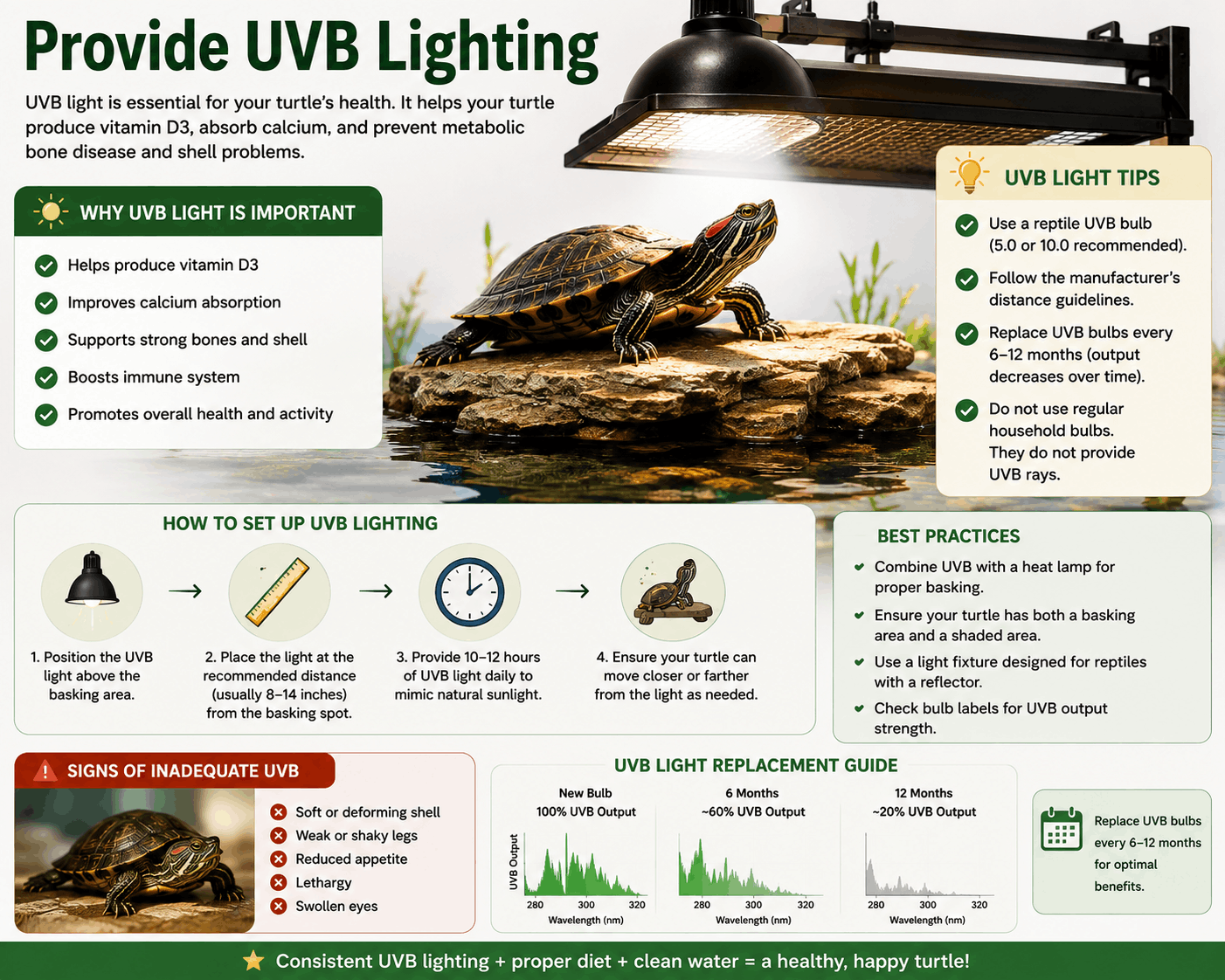
UVB lighting is one of the most important parts of indoor turtle care.
UVB exposure helps reptiles produce vitamin D3, which is necessary for calcium absorption and healthy bones and shells. Inadequate UVB can contribute to metabolic bone disease.
Many aquatic turtles need approximately 10–12 hours of appropriate UVB exposure each day, although the exact setup should follow the requirements of the species and the lighting manufacturer’s instructions.
Position the UVB Light Correctly
UVB effectiveness depends on:
- Bulb type
- Distance from the turtle
- Fixture design
- Screen or other barriers
- Manufacturer recommendations
- Age and condition of the bulb
Do not assume that a normal household light provides the UVB your turtle needs.
Create a Proper Basking Area
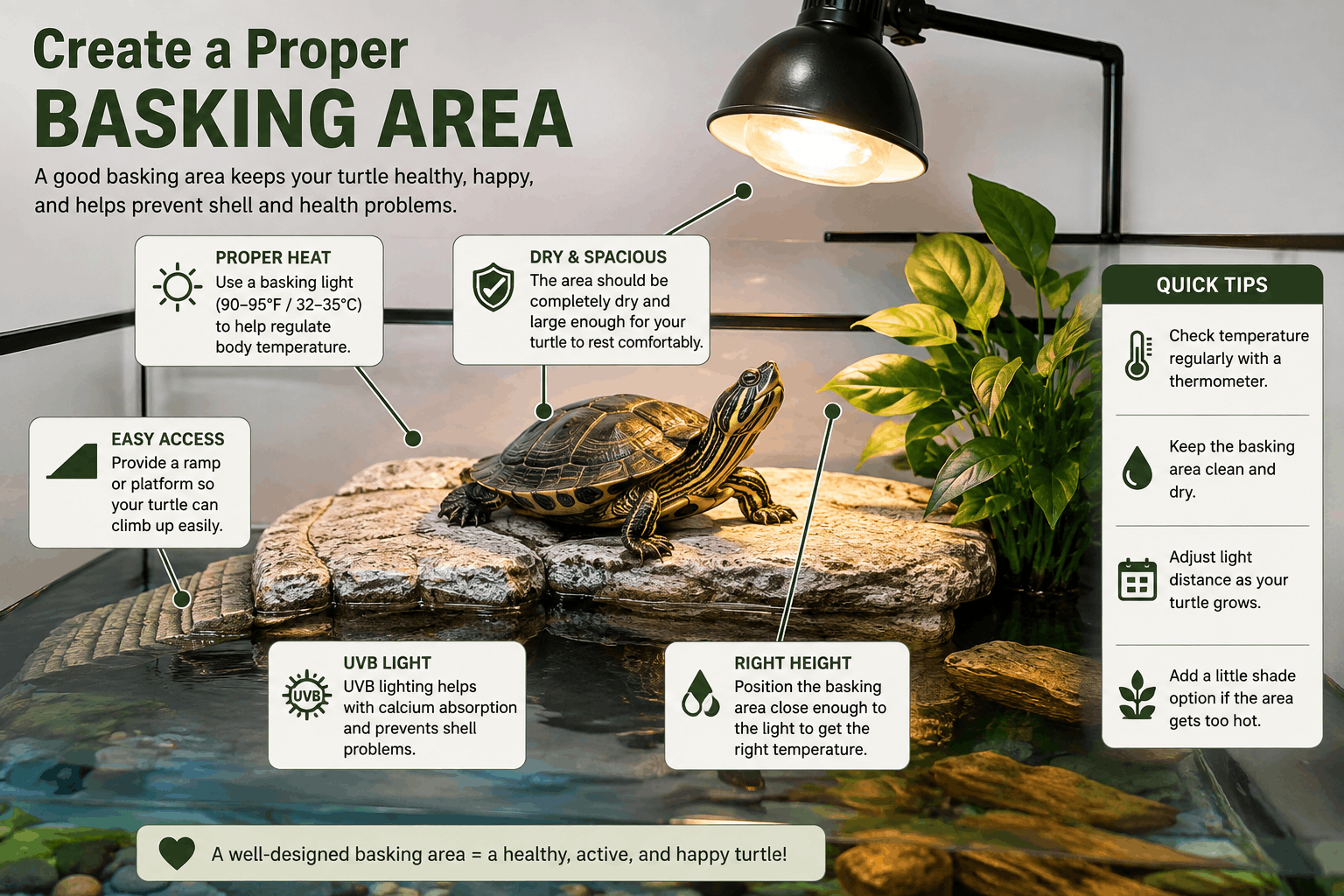
Turtles need an area where they can leave the water and warm themselves.
For many aquatic turtles, the basking area should be considerably warmer than the surrounding water. The exact temperature depends on the species and age of your turtle.
How to Set Up the Basking Spot
Place the basking area underneath the appropriate heat and UVB lighting.
Your turtle should be able to:
- Climb onto the platform.
- Become completely dry.
- Warm itself.
- Move away from the heat when necessary.
- Return to the water easily.
This creates a temperature gradient that allows the turtle to regulate its body temperature naturally.
What Do Pet Turtles Eat?
Diet is another essential part of caring for a pet turtle.
The correct food depends heavily on species and age. Aquatic turtles can be carnivorous or omnivorous, and dietary requirements change as turtles grow.
Basic Turtle Food Options
Depending on the species, a balanced diet may include:
- Commercial turtle pellets
- Appropriate insects or other animal protein
- Species-appropriate leafy greens
- Certain vegetables
- Occasional appropriate fruit
Do not assume that every turtle should eat exactly the same foods.
Don’t Overfeed Your Turtle
Overfeeding can contribute to obesity and poor water quality.
Follow feeding recommendations appropriate for your turtle’s species, size, and age. Young turtles often have different nutritional needs from adults.
Provide Calcium and Proper Nutrition
Calcium is important for healthy bones and shells.
A nutritionally balanced diet, appropriate UVB exposure, and correct habitat conditions work together to support normal calcium metabolism.
Do not add large amounts of supplements simply because they are advertised for reptiles. Ask a reptile veterinarian whether your turtle needs a specific supplement and how it should be used.
Clean the Turtle Tank Regularly
A good cleaning schedule makes pet turtle care easier and helps maintain water quality.
Daily Turtle Care
Check:
- Water temperature
- Basking temperature
- UVB and heat equipment
- Filter operation
- Turtle activity
- Appetite
- Obvious waste or debris
Remove uneaten food when appropriate so it does not unnecessarily pollute the water.
Regular Turtle Tank Maintenance
Depending on the aquarium and filtration system:
- Perform the appropriate water change.
- Clean accessible debris.
- Check the filter.
- Inspect the basking platform.
- Check the thermometer.
- Inspect the turtle for visible abnormalities.
Never clean aquarium equipment with household detergents or chemicals that could leave harmful residues.
Choose Safe Tank Decorations
Decorations can make the enclosure more interesting, but safety comes first.
Avoid objects that:
- Have sharp edges
- Can collapse
- Can trap the turtle
- Are small enough to swallow
- Prevent the turtle from reaching the surface
- Interfere with the basking platform
Avoid small stones and loose materials that your turtle could swallow.
Handle Your Pet Turtle Safely
Turtles are not usually pets that enjoy constant handling.
When handling your turtle:
- Support the body securely.
- Keep it close to a safe surface.
- Avoid dropping it.
- Keep handling sessions short.
- Return it to its enclosure promptly.
- Wash your hands afterward.
Turtles can carry Salmonella, so handwashing after handling turtles or cleaning their habitats is important.
How Often Should You Take a Pet Turtle to the Vet?
A turtle should receive veterinary care from someone familiar with reptiles or exotic pets.
A veterinarian can assess:
- Weight
- Shell condition
- Eyes
- Mouth
- Skin
- Respiratory health
- Nutrition
- Parasites
- Overall growth
Signs Your Turtle May Be Sick
Contact a reptile veterinarian if you notice:
- Persistent lack of appetite
- Difficulty breathing
- Nasal discharge
- Swollen or closed eyes
- Soft or abnormal shell
- Shell discoloration or lesions
- Severe lethargy
- Difficulty swimming
- Unusual floating
- Sudden changes in behavior
Don’t attempt to diagnose a serious illness from an online article.
Common Mistakes How to care for a Pet Turtle
Avoid these common mistakes.
Keeping a Turtle in a Small Tank
A turtle can quickly outgrow a small aquarium.
Skipping UVB Lighting
A normal room light is not a substitute for appropriate UVB exposure.
Letting the Water Become Dirty
Poor water quality can contribute to health problems and makes the turtle’s environment unpleasant.
Not Providing a Dry Basking Area
Your turtle needs an accessible place to leave the water and bask.
Guessing Temperatures
Use thermometers rather than guessing.
Feeding an Inappropriate Diet
Different turtle species have different nutritional requirements. Research the exact species rather than relying on a generic feeding list.
Pet Turtle Daily Car Checklist
You can save this checklist and use it as part of your routine.
| Task | How Often |
|---|---|
| Check water temperature | Daily |
| Check basking temperature | Daily |
| Check heat and UVB equipment | Daily |
| Observe appetite and behavior | Daily |
| Remove obvious waste/debris | As needed |
| Check filter | Regularly |
| Water change | According to water quality and setup |
| Clean enclosure | Regularly |
| Check shell and skin | Regularly |
| Veterinary examination | As recommended |
For a more organized routine, you can also use our pet care schedule guide.
Pet Turtle Supplies Checklist
Before bringing home a turtle, prepare the essential equipment.
Basic Turtle Habitat Supplies
- Appropriately sized aquarium or enclosure
- Water filtration system
- Water heater when required
- Aquarium thermometer
- Basking platform
- Heat lamp
- UVB lighting
- Safe enclosure accessories
- Species-appropriate food
- Water conditioner when appropriate
- Cleaning equipment
FAQs About Pet Turtle Care
How do you take care of a pet turtle for beginners?
Start by identifying the turtle species and providing the correct enclosure, clean water or suitable terrestrial habitat, appropriate temperature, UVB lighting, basking area, species-specific diet, and regular maintenance.
What do pet turtles eat?
Pet turtles eat different foods depending on their species and age. Aquatic turtles may eat commercial turtle foods, suitable vegetables, and appropriate animal-based foods, while terrestrial species can have different dietary requirements.
Can a small turtle live in a small tank?
A small turtle may temporarily require less space than an adult, but its enclosure should still provide adequate swimming or living space and should be planned around its expected adult size.
Does a pet turtle need UVB?
Many commonly kept turtles require UVB exposure when housed indoors. UVB supports vitamin D3 production and calcium metabolism. Exact lighting requirements depend on species and setup.
What temperature should turtle water be?
For many aquatic turtles, VCA recommends approximately 75–82°F (24–29°C), but the appropriate range depends on species and age. Always verify the requirements for your specific turtle.
How often should I clean a turtle tank?
Aquatic turtle tanks need frequent maintenance because turtles can quickly dirty their water. VCA recommends at least weekly water changes for aquatic turtles, with more frequent changes when the water becomes dirty.
Can turtles carry Salmonella?
Yes. Turtles and other reptiles can carry Salmonella. Wash your hands after handling a turtle or cleaning its habitat and keep turtle equipment away from food-preparation areas.
Is a pet turtle good for beginners?
A turtle can be suitable for a prepared beginner, but it should not be considered a low-maintenance pet. Proper habitat, lighting, heating, nutrition, cleaning, and long-term veterinary care are important.
Are pet turtles easy to care for?
Pet turtles can be easy to care for once their habitat is properly established, but they are not low-maintenance pets. They need the correct enclosure, clean water or suitable substrate, proper temperature, UVB lighting, a basking area, species-specific nutrition, and regular cleaning. Their needs also vary by species, so research your turtle’s requirements before bringing one home.
What not to do with a pet turtle?
Do not keep a turtle in an undersized enclosure, dirty water, or without appropriate UVB lighting and temperature control. Avoid feeding an inappropriate diet, using small gravel that the turtle could swallow, or making sudden changes to water temperature. You should also avoid handling a turtle unnecessarily and always wash your hands after handling it or cleaning its habitat.
How can I tell if my turtle is happy?
You cannot measure a turtle’s happiness the same way you would with a dog or cat, but a healthy turtle is generally active, alert, eating normally, basking appropriately, and responding normally to its surroundings. A sudden change in appetite or activity, lethargy, abnormal swimming, breathing problems, or shell changes can indicate illness and should be discussed with a reptile veterinarian.
How long can you leave a pet turtle alone?
A pet turtle should not be left completely unattended for an extended period. Even though turtles do not require constant human companionship, they still need reliable access to appropriate food and water, stable temperatures, functioning heating and lighting equipment, and a safe, clean habitat. For trips lasting more than a short period, arrange for a responsible person to check the turtle and its equipment regularly.