

Cat Cost Per Month: How Much Does a Cat Cost in 2026?
Cat cost per month is an important part of planning for a new cat. In 2026, many cat owners can expect to spend around $100–$150 per month on routine expenses such as food, litter, veterinary care, insurance, grooming, toys, and other supplies. Your actual cat cost per month can be higher or lower depending on your cat’s age, health, diet, lifestyle, and location. This guide explains cat cost per month, yearly expenses, first-year costs, and practical ways to save money while providing safe, healthy, and comfortable care for your cat.
Cat Cost Per Month at a Glance
| Cat expense | Typical monthly budget |
|---|---|
| Food | $25–$50 |
| Litter | $15–$30 |
| Treats | $5–$15 |
| Toys and enrichment | $5–$20 |
| Routine healthcare savings | $15–$30 |
| Pet insurance | Varies |
| Emergency savings | $20–$50+ |
| Practical monthly budget | About $100–$150+ |
Your cat cost per month depends on your cat’s age, health, diet, location and lifestyle. A kitten may cost more during the first year because of vaccinations, veterinary visits and other initial expenses.
How Much Does a Cat Cost Per Month?

A healthy adult indoor cat can often be budgeted at around $100–$150 per month for routine expenses, although some owners spend less and others spend considerably more.
The biggest recurring expenses are food and litter. Veterinary care, insurance, grooming and special diets can increase the total.
When calculating your cat cost per month, don’t forget to set aside money for unexpected veterinary bills.
Cat Food Cost Per Month
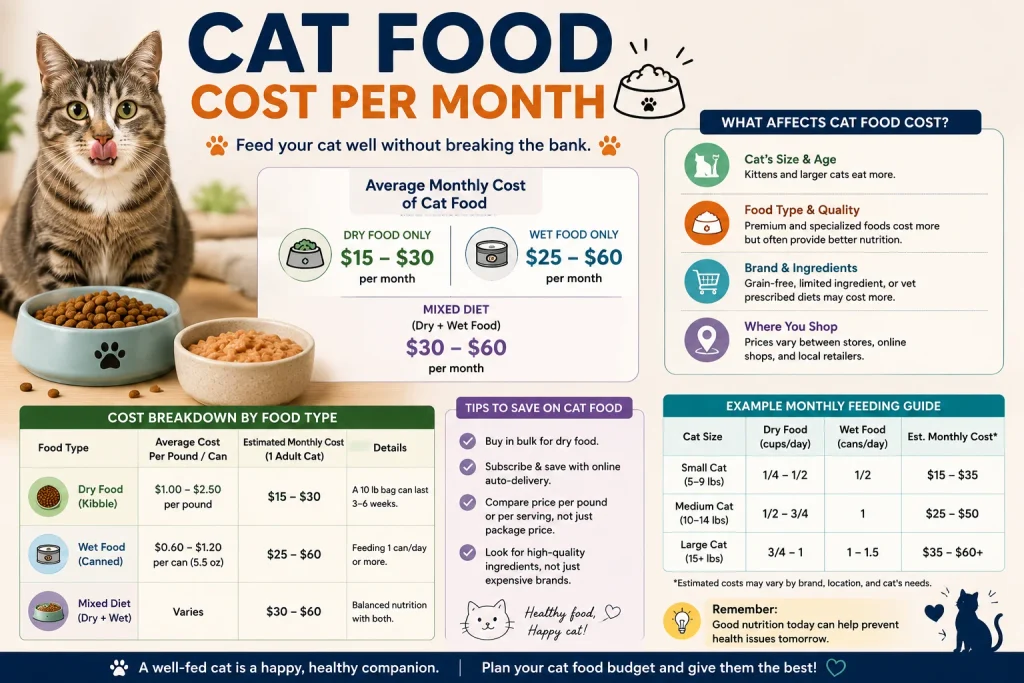
Food is one of the largest recurring parts of your cat cost per month.
Your food budget depends on:
- Your cat’s age
- Body size
- Activity level
- Dry or wet food
- Food brand
- Feeding amount
- Special dietary requirements
Instead of choosing food based only on the package price, compare the cost per serving and make sure the food is appropriate for your cat.
How to save money on cat food
- Compare price per serving.
- Look for reputable bulk-buy options.
- Avoid changing food unnecessarily.
- Follow appropriate feeding portions.
- Ask your veterinarian about dietary requirements.
Cat Litter Cost Per Month
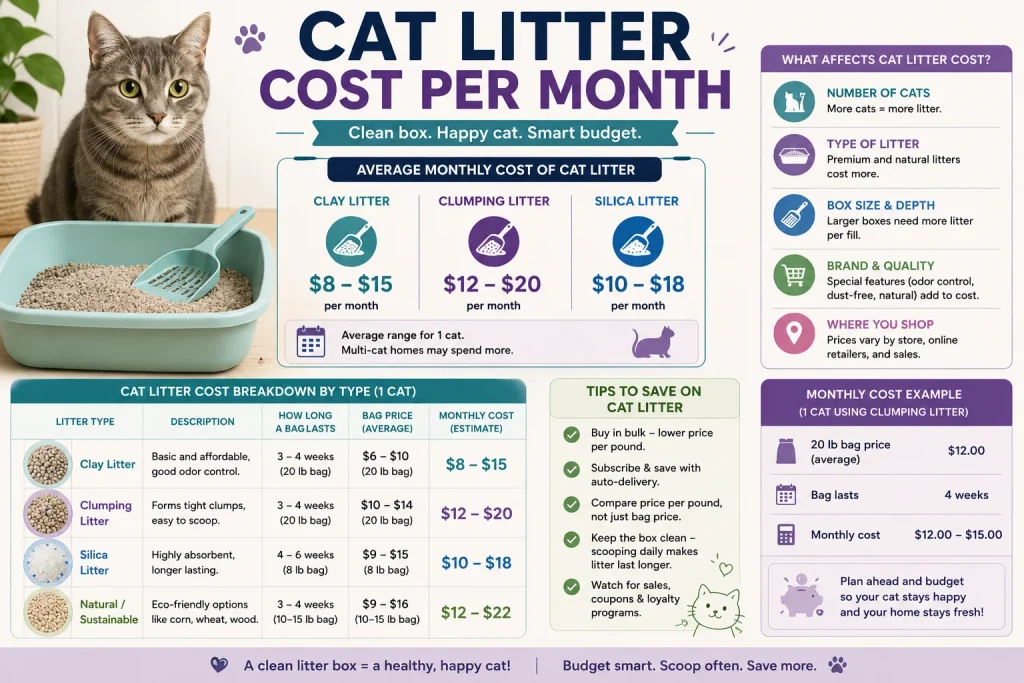
Litter is another important part of your cat cost per month.
The amount you spend depends on the type of litter, how many cats you have, how many litter boxes you use and how frequently you replace the litter.
Common options include:
- Clumping clay
- Non-clumping clay
- Crystal
- Wood
- Paper
- Plant-based litter
Ways to reduce litter costs
☐ Compare price per pound
☐ Scoop regularly
☐ Avoid throwing away clean litter
☐ Compare different litter types
☐ Buy larger packages when practical
Veterinary Costs and Your Cat Cost Per Month
Veterinary care can make your cat cost per month vary considerably.
Routine healthcare may include:
- Wellness examinations
- Vaccinations
- Parasite prevention
- Dental care
- Diagnostic tests
- Medication
- Microchipping
Routine expenses can be planned for, but emergencies are harder to predict.
That’s why a good cat budget should include an emergency pet fund.
For authoritative cat-care information, link this section to the ASPCA’s pet-care resources.
Cat Insurance and Monthly Expenses
Pet insurance is optional, but it can affect your cat cost per month.
Insurance prices vary according to:
- Cat’s age
- Location
- Coverage
- Deductible
- Reimbursement percentage
- Annual limit
- Insurance provider
Before purchasing a policy, compare the deductible, exclusions, reimbursement rate and annual limits.
Don’t choose a policy based solely on the monthly premium.
Cat Grooming Cost Per Month
Grooming costs depend on your cat’s coat.
Short-haired cats generally need less professional grooming, while long-haired cats may require more frequent brushing and coat maintenance.
At home, basic grooming supplies may include:
☐ Brush
☐ Nail clippers
☐ Cat-safe grooming tools
☐ Pet-safe cleaning supplies
Regular brushing can also help you monitor your cat’s coat and notice changes that may need veterinary attention.
First-Year Cat Cost
Your first-year cat cost per month may be higher than your normal ongoing budget because you’ll probably need to purchase supplies and pay for initial veterinary care.
Possible first-year expenses include:
- Adoption fee
- Carrier
- Litter box
- Food bowls
- Scratching post
- Bed
- Toys
- Microchip
- Vaccinations
- Spaying or neutering
- Initial veterinary examination
This is why prospective owners should calculate both monthly expenses and first-year expenses.
Cat Cost Per Year
To calculate your yearly cat expenses, multiply your monthly budget by 12.
For example:
$100 × 12 = $1,200 per year
$150 × 12 = $1,800 per year
However, this calculation does not include unexpected veterinary emergencies or major one-time expenses. For this reason, your cat cost per month is helpful for routine budgeting; however, you should also plan for unexpected costs throughout your cat’s lifetime.
Kitten Cost Per Month
A kitten can have a higher first-year cost than an established adult cat.
That’s because kittens may need:
- Multiple veterinary visits
- Vaccinations
- Spaying or neutering
- Microchipping
- Kitten food
- New supplies
- Additional supervision and enrichment
After the initial period, the kitten cost per month may become more predictable.
Is It Cheaper to Own a Cat or Dog?
In many households, cats can be less expensive to maintain than dogs, but there is no universal answer.
Dogs may require additional spending on:
- Larger quantities of food
- Walking
- Training
- Grooming
- Boarding
- Outdoor equipment
Cats may require:
- Food
- Litter
- Scratching equipment
- Veterinary care
- Indoor enrichment
The best choice depends on your budget, lifestyle and ability to provide long-term care.
Are Cats OK Alone for 8 Hours?
Most healthy adult cats can generally stay alone for a normal workday if they have fresh water, food, a clean litter box, a safe environment and appropriate enrichment.
Kittens, elderly cats and cats with medical or behavioral needs may require more frequent attention.
For additional authoritative information, you can reference PetMD’s cat-care guidance.
| cat supplies and pet essentials |
What Is the 3-3-3 Rule for Cats?
The 3-3-3 rule for cats is a general adoption guideline describing how a newly adopted cat may adjust to its new environment.
A commonly used interpretation is:
The cat be nervous or hide.
May begin establishing routines and exploring its environment.
The cat become increasingly comfortable and show more of its personality.
Every cat is different, so the timeline should be treated as a guideline rather than a strict rule.
How to Reduce Your Cat Cost Per Month
You can lower your cat cost per month without cutting corners on essential care.
Compare unit prices
For example, compare the cost per pound, serving, or use instead of simply comparing package prices.
Maintain preventive care
Regular veterinary care can help identify problems before they become more serious.
Groom at home when appropriate
Basic brushing and nail care can reduce some professional grooming expenses.
Buy durable supplies
A quality scratching post or carrier may provide better long-term value than repeatedly replacing inexpensive products.
Don’t buy unnecessary accessories
Cats need safe housing, food, water, litter, scratching opportunities, enrichment and healthcare. They don’t need every product marketed to pet owners.
Create an emergency fund
Add a small amount to your monthly budget for unexpected veterinary expenses.
Cat Cost Calculator
Calculate Your Cat Cost Per Month
Estimate your monthly, yearly, and first-year cat expenses in just a few clicks.
Monthly Cat Expenses
One-Time / First-Year Costs
Your Estimated Cat Budget
Note: This calculator provides an estimate only. Actual cat costs vary depending on your location, cat’s age, health, food, litter, veterinary needs, insurance and lifestyle.
FAQs
What Is a Good Monthly Budget for a Cat?
A good starting budget is about $100–$150 per month for one healthy adult cat, plus additional savings for unexpected veterinary expenses. Actual spending varies according to food, litter, healthcare, insurance and location.
How Much Does a Cat Cost Per Month?
A cat can cost around $100–$150 per month for routine care, although individual expenses can be lower or considerably higher.
How Much Does a Cat Cost Per Year?
A $100–$150 monthly budget equals approximately $1,200–$1,800 per year, before major unexpected veterinary expenses.
How Much Does It Cost to Adopt a Cat?
Adoption fees vary by shelter, rescue organization and location. Some adoption fees include services such as vaccinations, microchipping and spaying or neutering.
How Much Does a Kitten Cost Per Month?
A kitten can cost more during its first year because of veterinary care, vaccinations, spaying or neutering, food and initial supplies.
What Is the 3-3-3 Rule for Cats?
The 3-3-3 rule is a general guideline suggesting that a newly adopted cat may need roughly three days to decompress, three weeks to establish routines and three months to become fully comfortable.
Are Cats OK Alone for 8 Hours?
Most healthy adult cats can generally be left alone for around eight hours when their basic needs are met. Kittens and cats with special needs may require more frequent care.
Is It Cheaper to Own a Cat or Dog?
Cats are however expensive than dogs also routine ownership, but the actual cost depends on food, healthcare, grooming, training, boarding, insurance and the individual animal.