How to remove pet hair from carpet | Easy Methods
Pet hair can quickly become trapped between carpet fibers, especially if you have a dog or cat that sheds heavily. Learning how to remove pet hair from carpet is easier when you loosen the hair before vacuuming.
A vacuum alone may not pick up deeply embedded fur. Instead, use friction, rubber tools, a carpet rake, or a damp glove to lift stubborn hair first. Then vacuum the loosened hair from the carpet.
The good news is that you do not need expensive equipment. With a few simple tools and the right technique, you can make your carpet look much cleaner.
Why Is Pet Hair So Difficult to Remove From Carpet?
Pet hair does more than sit on top of the carpet. Individual hairs can become tangled between carpet fibers and held in place by static.
As a result, a quick vacuum pass may leave hair behind.
This is especially noticeable with:
- Long-haired dogs
- Long-haired cats
- Heavy shedders
- Thick or high-pile carpets
- Rugs with dense fibers
Therefore, the most effective approach is to loosen the hair first and vacuum second.
Recent cleaning guidance also recommends using friction or rubber-edged tools to gather embedded hair before vacuuming.
How to Remove Pet Hair From Carpet
There is no single tool that works perfectly for every carpet. However, these methods can help you remove loose and embedded dog or cat hair.
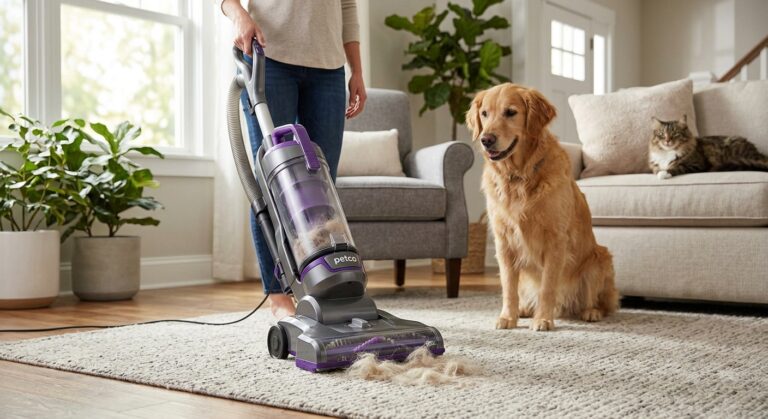
Vacuum the Carpet Slowly
Start with your vacuum cleaner.
Move slowly across the carpet instead of making fast passes. Going in different directions can help the vacuum reach hair trapped between fibers.
For the best results:
- Empty the vacuum before cleaning.
- Use the appropriate carpet setting.
- Move slowly.
- Vacuum in several directions.
- Pay extra attention to corners and edges.
- Repeat heavily affected areas.
A vacuum with a brush roll designed for pet hair can also make the job easier.
Tip: Do not rely on one quick pass if the hair is deeply embedded.
Use a Rubber Glove
A simple rubber cleaning glove can be surprisingly effective.
Put on a slightly damp rubber glove. Then run your hand across the carpet in short strokes.
The rubber creates friction and helps gather loose hairs into small clumps.
Once the hair collects together, pick it up or vacuum it.
This method works particularly well for small areas where using a large vacuum is inconvenient.
Try a Rubber Broom or Squeegee
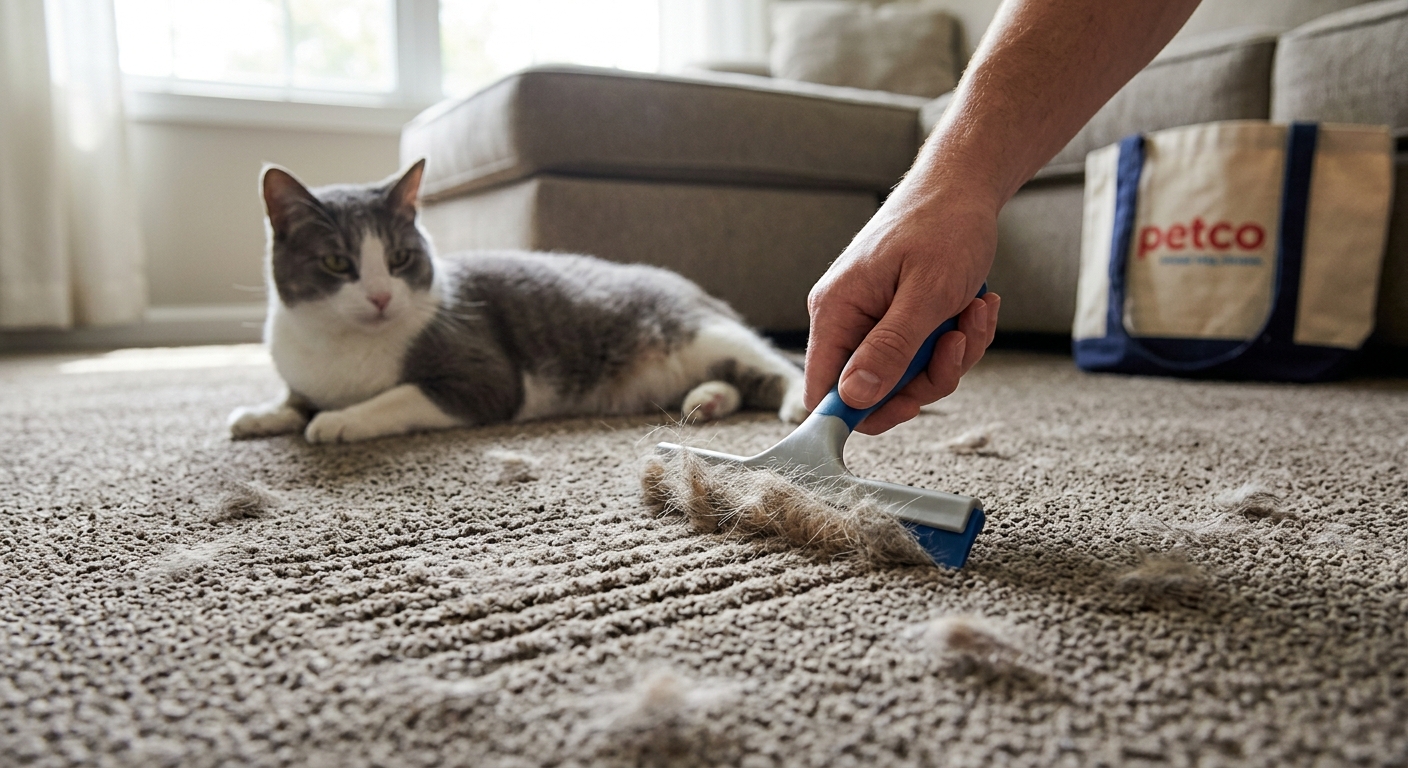
A rubber broom can help pull stubborn pet hair from carpet fibers.
Move the rubber edge across the carpet in one direction. The hair should begin forming small piles.
Afterward, collect the hair and vacuum the remaining debris.
A rubber squeegee can also work on some carpet surfaces. However, test any tool on a small hidden area first to make sure it does not damage the carpet.
Use a Carpet Rake
A carpet rake is another useful option for homes with heavy shedders.
The rake’s bristles can loosen hair that is sitting below the carpet surface.
Use gentle strokes rather than aggressively scraping the carpet.
Once the hair has been lifted, vacuum the area thoroughly.
This two-step method is often more effective than vacuuming alone.
Use a Pet Hair Removal Brush
Pet hair removal brushes are designed to collect fur from surfaces.
Choose a brush that is suitable for your particular carpet. Some brushes are better for low-pile carpets, while others work better on thicker surfaces.
Before cleaning the entire room, test the brush in an inconspicuous area.
That way, you can make sure it does not pull or damage the carpet fibers.
Use a Slightly Damp Cloth or Glove
Static can make pet hair difficult to collect.
A slightly damp rubber glove or cloth can help gather loose fur.
However, avoid soaking the carpet.
Too much moisture can create other cleaning problems, particularly if the carpet does not dry quickly.
For that reason, use only enough moisture to make the glove or cloth slightly damp.
Sprinkle Baking Soda for Odor, Not Hair
Baking soda can be useful when your carpet has pet odors, but it should not be considered your primary pet-hair removal method.
For odor control, lightly sprinkle baking soda over the carpet, allow it to sit for an appropriate period, and then vacuum thoroughly.
Recent cleaning guidance recommends vacuuming thoroughly afterward and avoiding excessive powder.
Important: Check your carpet manufacturer’s care instructions before using baking soda or any other powder.
Vacuum the Edges and Corners
Pet hair often collects along:
- Baseboards
- Under furniture
- Room corners
- Carpet edges
- Around pet beds
- Near doors
Use your vacuum’s crevice tool or another suitable attachment to reach these areas.
Cleaning the edges is important because hair left behind can quickly spread back onto the main carpet.
Repeat the Cleaning Routine Regularly
The easiest way to manage pet hair is to prevent large amounts from accumulating.
Instead of waiting until your carpet is covered in fur, create a regular cleaning routine.
For example:
Daily:
Quickly remove visible hair from high-traffic areas.
Several times per week:
Vacuum areas where your pet spends the most time.
Weekly:
Deep-clean carpets and rugs as needed.
The right schedule depends on your pet’s shedding level and your carpet.
What Is the Best Way to Remove Pet Hair From Carpet?
For most homes, the best approach is a two-step process:
- Loosen the hair with a rubber glove, rubber broom, carpet rake, or suitable brush.
- Vacuum slowly to collect the loosened hair.
This works because friction can help pull embedded fur from carpet fibers before the vacuum removes it.
If you simply vacuum repeatedly without loosening deeply trapped hair, you may continue to see fur left behind.
How to Remove Dog Hair From Carpet
Dog hair can be particularly noticeable when your dog sheds heavily.
Start by removing large visible clumps. Next, use a rubber tool or carpet rake to loosen hair from the fibers.
Then vacuum slowly.
For homes with heavy shedders, regular brushing of the dog can also help reduce the amount of loose fur that reaches the carpet.
How to Remove Cat Hair From Carpet
Cat hair can become trapped in carpet, especially around areas where your cat sleeps or spends a lot of time.
Use a rubber glove or suitable pet-hair brush to gather the fur.
Afterward, vacuum the carpet thoroughly.
Pay special attention to:
- Cat beds
- Favorite sleeping spots
- Under furniture
- Carpet corners
- Areas near scratching posts
Regular cleaning is easier than trying to remove several weeks of accumulated hair at once.
Can You Remove Embedded Pet Hair Without a Vacuum?
If you do not have a vacuum, you can loosen and collect pet hair with a rubber glove, rubber broom, carpet rake, or suitable pet-hair brush.
However, vacuuming afterward is usually helpful because it removes smaller hairs and debris that remain in the carpet.
Mistakes to Avoid When Removing Pet Hair
Avoid these common mistakes when cleaning your carpet.
Don’t soak the carpet
Too much water can make carpet difficult to dry and may create additional problems.
Don’t scrub aggressively
Hard scrubbing can damage some carpet fibers.
Don’t use an untested cleaning product
Always check the manufacturer’s instructions and test products on a small hidden area first.
Don’t vacuum too quickly
Slow passes give the vacuum more opportunity to collect loosened hair.
Don’t wait until the carpet is completely covered
Regular maintenance makes pet-hair removal much easier.
How to Prevent Pet Hair From Building Up
Removing pet hair is only half the solution.
You can reduce buildup by creating a simple routine.
Brush your pet regularly
Regular brushing can remove loose fur before it reaches your carpet.
Wash pet bedding
Pet beds can collect large amounts of hair. Washing them regularly can reduce the amount of fur that spreads around your home.
Use washable blankets
Place washable blankets on your pet’s favorite furniture or sleeping areas.
Vacuum regularly
Frequent vacuuming prevents loose hair from becoming deeply embedded.
Focus on high-traffic areas
You do not necessarily need to deep-clean your entire home every day. Instead, concentrate on areas your pet uses most.
FAQs
What is the easiest way to remove pet hair from carpet?
The easiest method is to loosen the hair with a rubber glove, rubber broom, or carpet rake and then vacuum slowly. This combination is generally more effective than relying on suction alone.
How do you get deeply embedded pet hair out of carpet?
Use a rubber tool or carpet rake to pull the hair toward the surface. Collect the loosened fur and then vacuum the carpet in multiple directions.
Does baking soda remove pet hair from carpet?
Baking soda is mainly useful for helping with carpet odors. It does not replace a rubber tool, brush, or vacuum for removing pet hair.
Can a regular vacuum remove pet hair?
Yes. A regular vacuum can remove loose pet hair. However, deeply embedded hair may require you to loosen it with a rubber tool or brush first.
How often should I vacuum if I have a shedding pet?
The ideal schedule depends on how much your pet sheds. Heavy shedders may need vacuuming several times per week, while lighter shedders may require less frequent cleaning.
What removes dog hair from carpet best?
A combination of a rubber grooming-style tool, carpet rake, or pet-hair brush followed by slow vacuuming can work well for removing dog hair from carpet.