
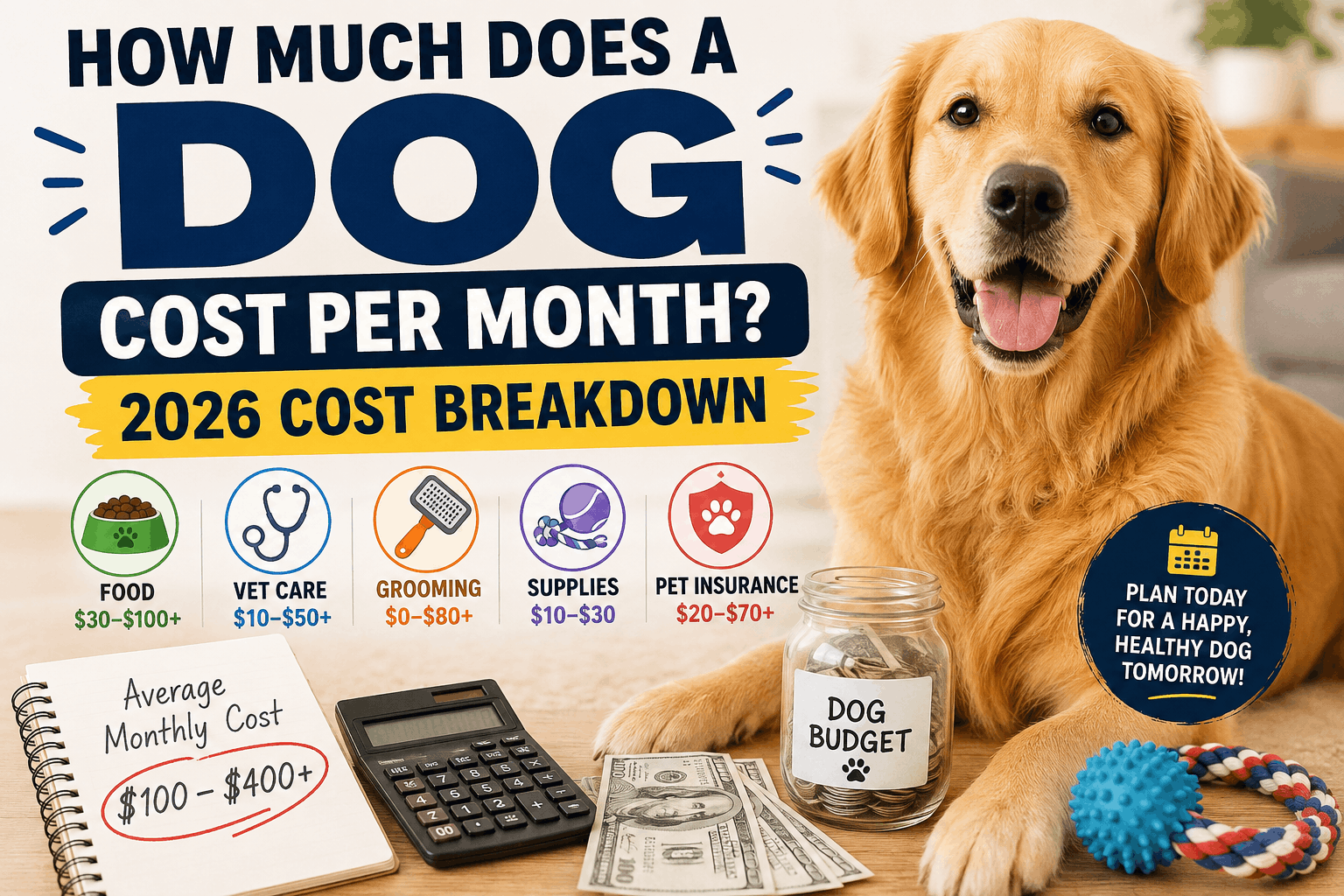
How Much Does a Dog Cost Per Month? 2026 Cost Breakdown
If you’re wondering how much does a dog cost per month, you’re not alone. The monthly cost of owning a dog depends on its size, breed, age, health, food, grooming needs, and lifestyle.
For many households, a realistic starting budget is around $100 to $400 or more per month. However, some dogs cost less, while others require a much larger budget.
Food is only one part of the expense. Veterinary care, grooming, parasite prevention, treats, toys, supplies, insurance, and unexpected medical bills can also affect your budget.
This guide breaks down the monthly cost of owning a dog so you can plan before bringing a new pet home. Dog grooming costs
How Much Does a Dog Cost Per Month?
The average monthly cost of owning a dog can vary widely. A small, healthy dog with basic needs may cost less than a large dog that needs special food or regular grooming. Dog bath services
Here is a simple monthly budget to help you plan:
| Dog expense | Estimated monthly cost |
|---|---|
| Dog food | $30–$100+ |
| Treats | $10–$30 |
| Preventive medication | $10–$30+ |
| Veterinary care savings | $10–$50+ |
| Grooming | $0–$80+ |
| Toys and supplies | $10–$30 |
| Pet insurance | $20–$70+ |
| Estimated total | $100–$400+ |
These numbers are estimates, not fixed prices. Your actual costs may be higher or lower.
For example, a large dog usually eats more food than a small dog. Similarly, a long-haired breed may require more grooming.
Average Monthly Cost of Owning a Dog
The average monthly cost of owning a dog depends on your dog’s individual needs.
A basic budget might look like this:
Low-cost dog budget
Approximately $100–$200 per month
This may work for a healthy dog with modest food, grooming, and supply needs.
Moderate dog budget
Approximately $200–$400 per month
This budget can include better-quality food, regular grooming, preventive care, treats, toys, and pet insurance.
Higher-cost dog budget
More than $400 per month
A larger dog, special diet, frequent grooming, daycare, medication, or ongoing medical treatment can increase monthly expenses.
Therefore, it is better to create a budget based on your dog’s needs rather than relying on one national average.
How Much Does Dog Food Cost Per Month?
Dog food is one of the most predictable monthly expenses.
The amount you spend depends mainly on your dog’s size and the type of food you choose.
A general planning range is:
- Small dogs: $20–$50 per month
- Medium dogs: $30–$70 per month
- Large dogs: $50–$100+ per month
However, these figures can change. Premium foods, fresh diets, prescription foods, and special diets can cost significantly more.
Before choosing a food, consider your dog’s age, activity level, allergies, and nutritional requirements.
Buying larger packages can sometimes reduce the cost per pound. Still, make sure your dog does well with the food before purchasing large quantities.
How Much Does Veterinary Care Cost?
Veterinary care is another important part of your dog budget.
Routine care may include:
- Wellness examinations
- Vaccinations
- Dental care
- Flea prevention
- Tick prevention
- Heartworm prevention
- Blood tests
- Prescription medication
Instead of waiting for a veterinary bill, consider setting aside money every month.
For example, saving $25 per month gives you $300 after one year. Saving $50 per month gives you $600.
However, routine savings may not cover a serious emergency. Therefore, an emergency fund or suitable pet insurance can provide additional financial protection.
How Much Does Dog Grooming Cost?
Grooming costs depend on your dog’s coat and grooming requirements.
Short-haired dogs may only need occasional baths, brushing, and nail trimming. On the other hand, dogs with long or curly coats may need professional grooming regularly.
Professional grooming may include:
- Bathing
- Brushing
- Hair trimming
- Nail clipping
- Ear cleaning
- Coat maintenance
You can reduce grooming expenses by learning basic brushing and bathing at home.
However, complicated haircuts and breed-specific grooming are often better handled by a professional.
How Much Do Dog Supplies Cost?
Dog supplies are not always monthly purchases. Nevertheless, you should include them in your overall budget. Essential pet supplies
Common supplies include:
- Collar
- Leash
- Harness
- Food bowls
- Water bowls
- Dog bed
- Crate
- Toys
- Waste bags
- Grooming supplies
- Cleaning products
Some supplies can last for years. Others need regular replacement.
A reasonable starting point is $10–$30 per month for replacing toys, accessories, and everyday supplies.
How Much Does Pet Insurance Cost?
Pet insurance can help protect you from unexpected veterinary expenses.
The monthly premium depends on several factors, including:
- Your dog’s age
- Breed
- Location
- Coverage
- Deductible
- Reimbursement level
- Policy limits
For this reason, prices can vary significantly between dogs and insurance providers.
Before choosing a policy, check the deductible, reimbursement percentage, waiting periods, exclusions, and annual limits.
A cheaper policy is not always the best option if it provides significantly less coverage.
How Much Does a Dog Cost in the First Year?
The first year can cost more than later years because you may need to purchase several things at once.
For example, you may need:
- Adoption or purchase fees
- Initial veterinary examination
- Vaccinations
- Spaying or neutering
- Microchipping
- Crate
- Dog bed
- Food bowls
- Collar
- Leash
- Toys
- Training
- Grooming supplies
Puppies may also require additional vaccinations, training, and supplies.
On the other hand, an adopted adult dog may already have received some veterinary care.
Therefore, don’t base your first-year budget only on the monthly food bill.
How Much Does a Dog Cost Per Year?
You can estimate annual expenses by multiplying your monthly budget by 12.
For example:
$150 × 12 = $1,800 per year
A $250 monthly budget would equal:
$250 × 12 = $3,000 per year
A $400 monthly budget would equal:
$400 × 12 = $4,800 per year
These calculations don’t include every possible expense.
Emergency veterinary care, boarding, professional training, surgery, and major medical treatment can increase annual costs substantially.
Does Dog Size Affect the Monthly Cost?
Yes, dog size can affect your monthly expenses.
Large dogs generally consume more food. They also require larger beds, crates, harnesses, and other supplies.
However, size isn’t the only factor.
For example, a small dog that needs frequent professional grooming may cost more than a large dog with a short, easy-care coat.
Breed, health, age, diet, and lifestyle also influence the total cost.
What Are the Cheapest Dogs to Own?
There isn’t one dog breed that is always the cheapest to own.
Instead, consider the dog’s:
- Food requirements
- Grooming needs
- Exercise requirements
- Health risks
- Training needs
- Size
- Overall lifestyle
Adopting from a shelter or rescue can also reduce your initial acquisition costs.
Still, don’t choose a dog based only on price. The best choice is a dog whose needs match your lifestyle and budget.
How to Reduce the Cost of Owning a Dog
Fortunately, there are several ways to manage your expenses.
Compare Dog Food Prices
Compare the price per pound rather than simply comparing package prices.
Groom Your Dog at Home
Basic brushing and bathing can reduce professional grooming expenses.
Buy Durable Supplies
Quality toys, beds, collars, and leashes can last longer than inexpensive products that need frequent replacement.
Schedule Preventive Care
Regular veterinary care can help identify health problems early.
Create an Emergency Fund
Put aside a small amount every month for unexpected veterinary expenses.
Compare Pet Insurance
Compare coverage, deductibles, reimbursement rates, exclusions, and limits before choosing a policy.
Avoid Unnecessary Purchases
Your dog doesn’t need every new toy or accessory. Focus on food, health, safety, exercise, and comfort first.
Is Owning a Dog Expensive?
Owning a dog can be expensive, but careful planning makes the costs easier to manage.
The biggest recurring expenses usually include food, veterinary care, preventive medication, grooming, supplies, and insurance.
Unexpected veterinary bills can also make a significant difference.
Therefore, create a realistic monthly budget before getting a dog. Then, keep an emergency fund for expenses that aren’t part of your normal budget.
FAQs
How Much Does a Dog Cost Per Month in 2026?
In 2026, the average cost of owning a dog is about $125–$300 per month for many U.S. households. Larger dogs, special diets, frequent grooming, pet insurance, and higher local veterinary prices can push the monthly cost to $400 or more.
A typical monthly dog budget may include:
| Expense | Estimated Monthly Cost |
|---|---|
| Dog food | $30–$100+ |
| Routine vet care* | $15–$50+ |
| Flea, tick & heartworm prevention | $10–$40+ |
| Grooming | $0–$80+ |
| Toys & basic supplies | $10–$30 |
| Pet insurance | $25–$70+ |
| Typical total | $125–$300+ |
*Routine veterinary costs are averaged across the year because vet bills usually occur as larger, occasional expenses rather than as a monthly payment.
The exact amount depends on your dog’s size, age, breed, health, location, food, grooming needs, and lifestyle. A small, short-haired dog may cost considerably less than a large or high-maintenance breed.
What Is the Average Cost of Owning a Dog Per Month?
A practical 2026 estimate is $125–$300 per month, or roughly $1,500–$3,500 per year for basic ongoing ownership. Some dogs cost less, while large breeds or dogs with extensive medical or grooming needs can cost substantially more.
Keep in mind that this monthly figure does not mean every month will cost the same. An annual vaccination visit may create a larger bill in one month, while another month may only include food and routine supplies.
How Much Does a Small Dog Cost Per Month?
A small dog may cost approximately $125–$210 per month in 2026, depending on food, veterinary care, insurance, grooming, and supplies. Small dogs often consume less food, but their costs can still increase because of medical needs, professional grooming, boarding, or insurance.
How Much Does a Large Dog Cost Per Month?
A large dog may cost around $200–$400 or more per month. Food, medications, grooming, insurance, and some veterinary services can be more expensive for larger dogs. High-maintenance breeds can exceed this range.
How Much Does a Puppy Cost Per Month?
Puppies can be more expensive than adult dogs during their first year. In addition to food and everyday supplies, owners may need to budget for vaccinations, parasite prevention, training, spaying or neutering, a crate, bedding, toys, and other startup supplies.
For that reason, don’t plan your puppy budget around food alone. The first year usually costs more than later years because several one-time and veterinary expenses occur early in the dog’s life.
What Is the Lifetime Cost of Owning a Dog?
There is no single lifetime price because dogs have different lifespans, sizes, health conditions, and care requirements. However, even a relatively modest monthly budget can add up to tens of thousands of dollars over a dog’s lifetime.
For example, a $200 monthly budget equals $2,400 per year before unexpected medical expenses. Over 12 years, that would be $28,800.
That is why prospective owners should consider both the monthly dog cost and unexpected veterinary expenses before bringing a dog home.
What About Dog Adoption Costs?
Adoption is usually a one-time expense, so it should be calculated separately from your monthly dog budget. Adoption fees vary by shelter, rescue organization, location, age, and the services included.
Your initial budget may also need to cover a crate, collar, leash, bowls, bed, food, toys, identification, vaccinations, and other supplies.
A realistic 2026 budget for many U.S. dog owners is about $125–$300 per month, but planning for $300–$400+ can provide more room for larger dogs, insurance, grooming, and unexpected expenses.