

Best Cheapest Pets: 20 Affordable and Easy Pets to Own
Finding the best cheapest pets can be a great option if you want animal companionship without taking on the high costs and daily demands that often come with dogs or other larger pets. Fortunately, there are many affordable and low-maintenance options that can fit different budgets and lifestyles.
From hamsters and mice to betta fish, parakeets, and even ant farms, there are many united pets that can fit different budgets and lifestyles. best pocket pets for beginners
However, the cheapest pet to buy is not always the cheapest pet to keep. Food, housing, cleaning supplies, veterinary care, and the animal’s lifespan all affect the real cost of ownership. The right choice should balance affordability, care requirements, space, and the amount of interaction you want.
In this guide, you’ll discover affordable pets, pets under $20, easy-to-care-for animals, adoption options, and practical answers to the most common questions about inexpensive pet ownership.
What Makes a Pet Affordable?

A truly affordable pet should have reasonable ongoing expenses for food, housing, cleaning, enrichment, and veterinary care. You should also consider how long the animal may live.
For example, a fish might cost only a few dollars to purchase, but a proper aquarium, filter, heater, water conditioner, food, and maintenance supplies can cost considerably more. Similarly, a hamster may be inexpensive to purchase, but it still needs an appropriate enclosure, bedding, food, enrichment, and veterinary care when necessary.
The sources you provided emphasize the same important point: budget-friendly ownership requires looking at the complete financial commitment, not simply the price of the animal.
Before choosing a pet, consider:
- Initial purchase or adoption cost
- Habitat or enclosure
- Food and treats
- Bedding or substrate
- Toys and enrichment
- Cleaning supplies
- Veterinary expenses
- Lifespan
- Time required for daily care
- Whether the animal needs companionship from another animal
Best Cheapest Pets to Consider

There isn’t one perfect inexpensive pet for everyone. Some animals are inexpensive but require more specialized care, while others are easy to maintain but have higher setup costs.
Here are 20 affordable options worth considering.
Hamsters
Hamsters are among the most accessible small pets for people on a limited budget. The MyBudgetCoach source lists an average purchase price of around $10–$20, with estimated monthly expenses of approximately $10–$20.
They need a suitable enclosure, bedding, food, fresh water, hiding places, and an exercise wheel. Because hamsters are generally active at night, they may be particularly interesting for people who enjoy watching their pets during evening hours.
Best for: Beginners and small living spaces.
Mice
Pet mice can be surprisingly inexpensive. The source lists an average cost of approximately $5–$15 and monthly expenses of around $5–$10.
They are curious, active animals that benefit from tunnels, wheels, hiding areas, and other enrichment.
Best for: People interested in small, active animals.
Betta Fish
Betta fish are colorful, relatively inexpensive, and fascinating to watch. The source lists a typical cost of about $5–$20 and recommends a 2.5–5 gallon tank.
Watching fish move through an aquarium can also create a peaceful atmosphere. Watson’s Friends highlights betta fish as a low-maintenance companion that can provide a calming visual experience.
Best for: People who want a quiet pet with minimal direct interaction.
4. Guppies are another inexpensive fish option. They are colorful, active, and can live in community aquariums when housed with compatible fish.
The source lists their cost at roughly $3–$10, although the aquarium and equipment should be included in your budget.
Best for: Aquarium beginners who enjoy watching active fish.
Goldfish
Goldfish can have a very low purchase price, with the source listing approximately $3–$10. However, don’t mistake a cheap fish for a cheap setup. The source notes a requirement of about 20 gallons per fish and a potential lifespan of 10–15 years.
That makes goldfish a good example of why the purchase price alone should never determine your decision.
Best for: People prepared to maintain a proper aquarium long term.
Parakeets
Parakeets, also called budgies, are social, intelligent, and entertaining birds. The source lists a typical cost of about $20–$50.
They can learn sounds and words and enjoy interacting with their owners. Watson’s Friends describes them as cheerful companions that need regular feeding, cage cleaning, and daily interaction.
Best for: People who want an interactive pet without owning a dog or cat.
Finches
Finches are small social birds that can be relatively affordable. The source lists costs of approximately $20–$100.
They generally require a suitable cage, perches, food, bathing opportunities, and enrichment.
Best for: Bird lovers who enjoy observing rather than constantly handling their pets.
Canaries
Canaries are known for their singing and attractive appearance. The source gives a price range of approximately $25–$150.
Although the purchase price can vary considerably, their small size means they don’t require the same amount of space as larger companion animals.
Best for: People who enjoy birdsong and visual companionship.
Guinea Pigs
Guinea pigs are gentle and social animals. The source lists an average purchase cost of $20–$40 and monthly expenses of approximately $20–$30.
They need hay, vegetables, pellets, clean bedding, fresh water, and appropriate living space. Watson’s Friends also highlights their social nature and comforting vocalizations.
Best for: Families and people wanting a more interactive small pet.
Leopard Geckos
Leopard geckos are calm reptiles that can be appealing to first-time reptile owners. They require a secure enclosure, appropriate heating, hiding areas, and an insect-based diet.
Watson’s Friends also describes leopard geckos as relatively low-maintenance and interesting to observe.
Best for: People who prefer quiet, unusual pets.
Anoles
Anoles are small lizards that can be relatively inexpensive to feed. They need an enclosure with vertical space, climbing opportunities, lighting, and appropriate humidity.
Best for: Reptile enthusiasts who enjoy observing natural behaviors.
Corn Snakes
Corn snakes are generally known for manageable size and docile behavior. They require a secure enclosure, appropriate temperatures, hiding spaces, water, and a suitable diet.
Best for: Responsible owners interested in reptiles.
Ant Farms
An ant farm can be one of the lowest-cost ways to keep and observe living creatures. The source lists basic ant farm kits at approximately $10–$20, with premium sets costing more.
They are particularly interesting because you can observe tunneling, feeding, and colony behavior.
Best for: Children with adult supervision, classrooms, and curious hobbyists.
Praying Mantises
Praying mantises are fascinating insects that require relatively simple housing compared with many traditional pets. They need an appropriate enclosure, suitable humidity, temperature, and live insects for food.
Best for: People who prefer observation over cuddling.
Stick Insects
Stick insects are another unusual option. Their care can be relatively straightforward when their enclosure, humidity, temperature, and food requirements are properly managed.
Best for: People interested in educational and unusual pets. Turtles
Turtles can be quiet companions and may appeal to people who prefer animals that don’t require constant interaction. Watson’s Friends describes them as calm animals that can encourage observation and mindfulness.
However, turtles are not automatically cheap. Their habitat, filtration, heating, lighting, and long lifespan need to be considered.
Best for: Owners prepared for long-term specialized care.
Cats
may not be the cheapest pets overall, but adopting an adult cat from a shelter can be more affordable than buying one from a breeder. For many owners, cats offer excellent companionship without the need for daily walks. Their independent nature also makes them a practical choice for people who want an affectionate pet with a relatively flexible routine.. Watson’s Friends describes them as independent but emotionally supportive companions. monthly cost of owning a cat
Best for: People wanting a stronger human-animal bond.
Rabbits
Rabbits can be affectionate and can learn litter habits, but they should not be treated as effortless pets. They need suitable housing, hay, fresh vegetables, exercise, enrichment, and veterinary care.
Watson’s Friends identifies rabbits as gentle, intelligent companions but rates their care needs as moderate.
Best for: Owners who want an affectionate small animal and can provide adequate space.
Shelter or Rescue Pets
Adoption can be one of the smartest ways to reduce the initial cost of obtaining a pet. Shelters and rescues may have cats, rabbits, guinea pigs, birds, and other animals looking for homes.
However, adoption does not mean free ownership. You still need to budget for food, supplies, preventive care, and unexpected veterinary bills.
Best for: People who want to combine affordability with giving an animal a second chance.
Community or Educational Pets
For some people, keeping a traditional pet isn’t necessary. Visiting a shelter, volunteering with an animal rescue, or caring for a classroom or community animal can provide interaction without taking on the full financial responsibility of ownership.
Best for: People who love animals but aren’t ready for a permanent commitment.
Cheapest Pets by Budget
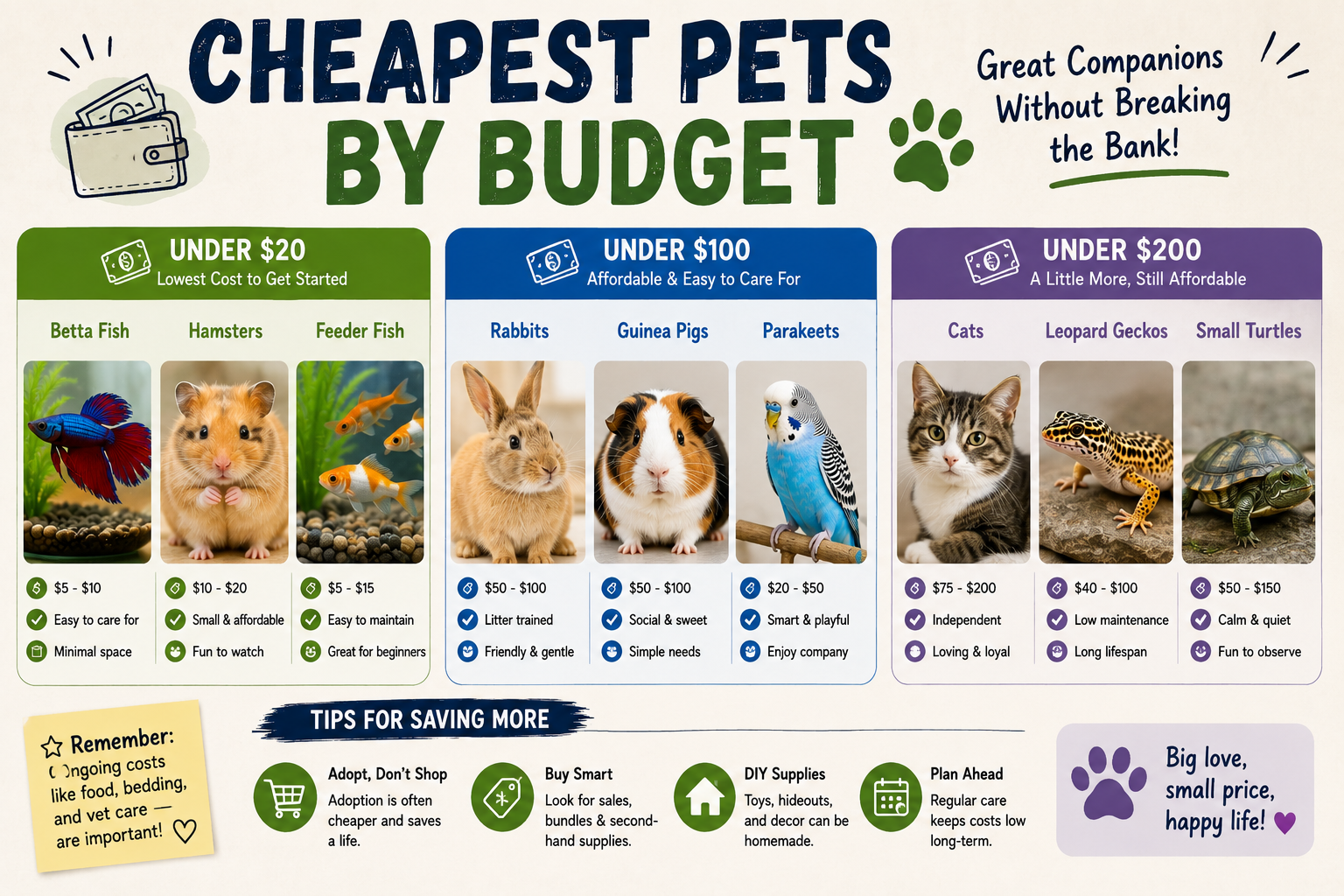
If your budget is the main concern, it helps to think in spending levels.
Pets under $20
Some examples from the researched sources include:
- Mice: approximately $5–$15
- Hamsters: approximately $10–$20
- Betta fish: approximately $5–$20
- Guppies: approximately $3–$10
- Goldfish: approximately $3–$10
These figures refer primarily to the animal itself, not necessarily the complete setup.
Pets under $100
Depending on location and species, examples can include:
- Guinea pigs
- Parakeets
- Finches
- Some canaries
- Hamsters
- Mice
- Fish
- Certain reptiles
The full setup can push the total above $100, so always calculate habitat and supplies separately.
Pets under $200
A $200 starting budget gives you more flexibility for an appropriate enclosure and supplies. Depending on the animal and where you live, options may include birds, guinea pigs, reptiles, fish, and some adopted cats or rabbits.
The important lesson is simple: budget for the complete setup, not just the animal.
What Are the Easiest Pets to Take Care Of?
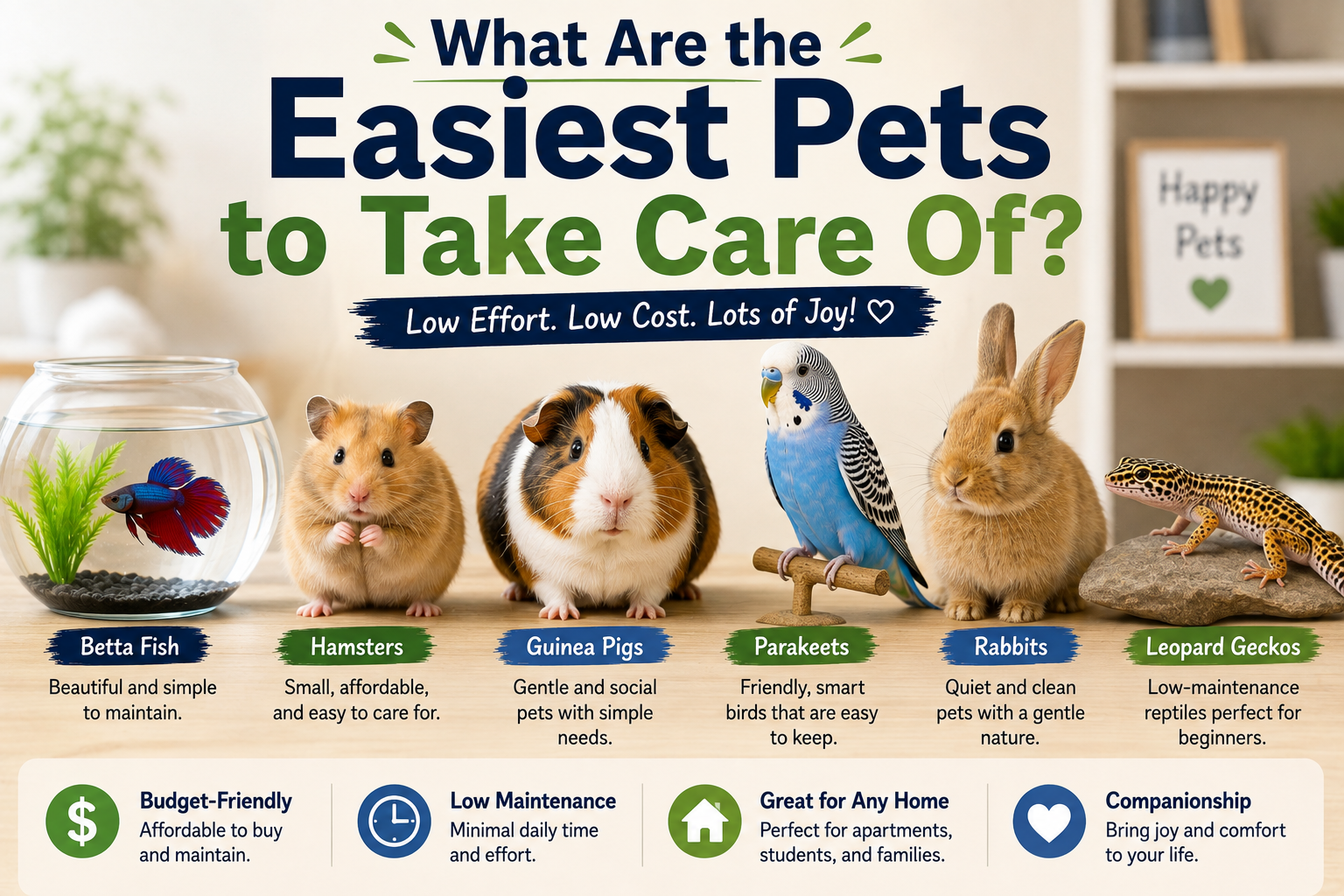
If ease of care matters more than absolute price, betta fish, hamsters, mice, and certain reptiles may be worth considering. But “easy” is relative. A hamster still needs a properly sized habitat, bedding, enrichment, food, water, and cleaning. A betta still needs appropriate water conditions and an aquarium. A leopard gecko still needs temperature control and a suitable diet.
Watson’s Friends rates its featured animals from low to moderate care and emphasizes that even low-maintenance animals require consistent care.
The easiest pet is therefore the one whose care requirements match your schedule, knowledge, space, and budget.
How to Choose the Best Cheapest Pet for You

Ask yourself five questions before buying or adopting.
How much can I spend each month?
A low purchase price doesn’t guarantee low ongoing expenses.
How much space do I have?
Fish, birds, rodents, and reptiles can have very different habitat requirements.
How much interaction do I want?
A fish provides visual enjoyment, while a parakeet, cat, rabbit, or guinea pig can provide more direct interaction.
How long can I commit?
Some pets live only a few years, while others can live for a decade or much longer.
Can I afford veterinary care?
Even inexpensive animals can become expensive if they become sick or injured.
MyBudgetCoach specifically recommends considering lifespan, space, maintenance, lifestyle compatibility, food, housing, and veterinary expenses before choosing an inexpensive pet. monthly cost of owning a dog
Final Verdict: Which Cheap Pet Is Best?
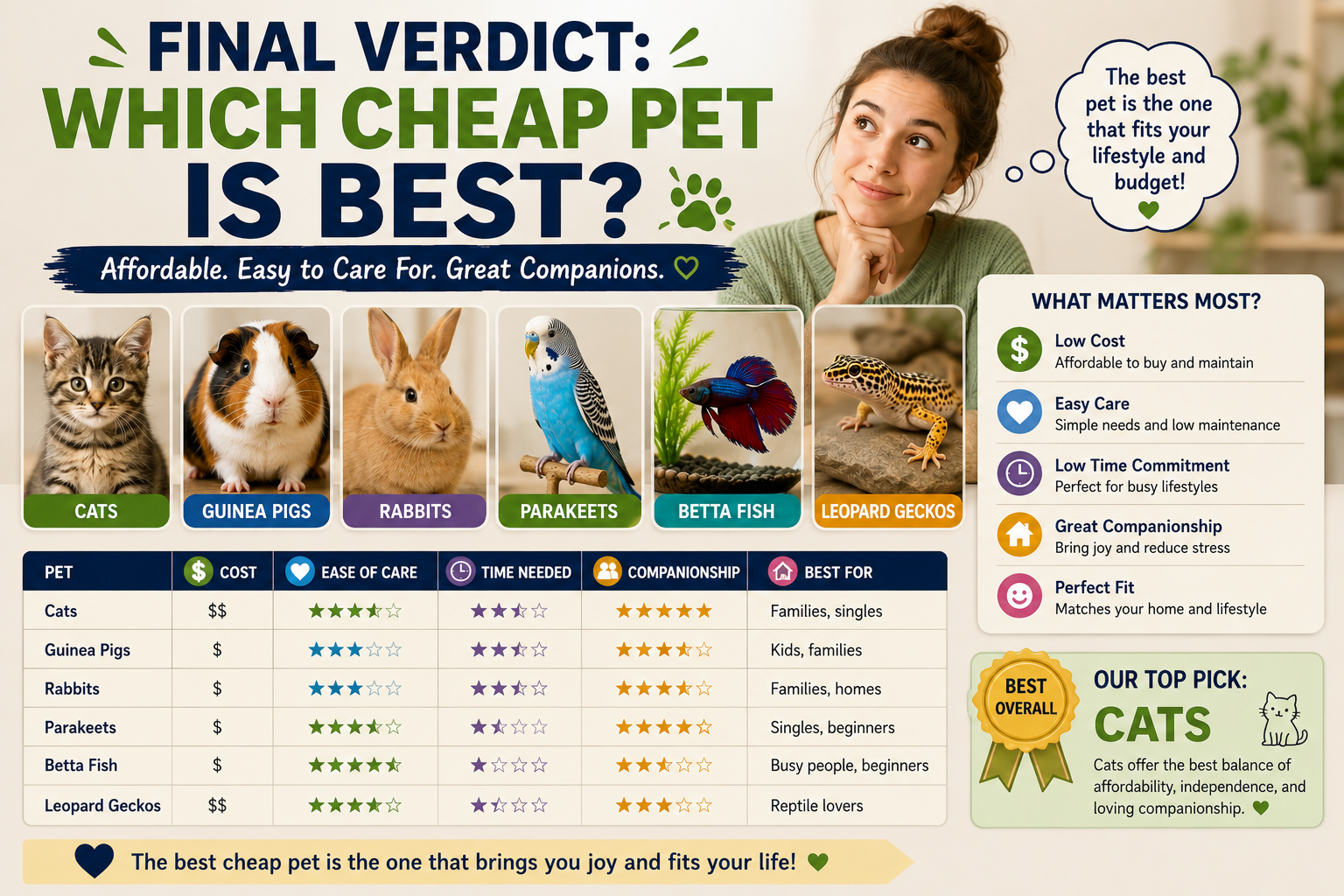
The best choice is ultimately the animal you can afford to care for properly for its entire life. A cheap pet should never mean cheap care. When you plan for food, housing, enrichment, veterinary care, and time, you give yourself—and your new companion—the best chance of a happy relationship.
Frequently Asked Questions About the Best Cheapest Pets
What is the most affordable pet to own?
For initial purchase price, small animals such as mice, hamsters, betta fish, guppies, and goldfish can be among the most affordable choices. The researched source lists mice at about $5–$15, hamsters at $10–$20, bettas at $5–$20, guppies at $3–$10, and goldfish at $3–$10.
However, the most affordable pet overall depends on setup, food, veterinary care, and lifespan.
What is the most cheapest pet to own?
“Cheapest” is better understood as the pet with the lowest total cost of ownership, not simply the lowest purchase price. A mouse or small fish may cost very little to acquire, but it still needs appropriate housing and regular care.
What is a cheap but good pet?
A hamster is a strong choice for someone wanting an inexpensive small companion. A betta fish may be better for someone who wants a quiet pet to observe. A parakeet is a better option if interaction and personality are priorities.
What is the 3-3-3 rule for new pets?
The 3-3-3 rule is a commonly used adoption guideline describing how some newly adopted pets may adjust over time: roughly three days to decompress, three weeks to establish a routine, and three months to feel fully settled. It is a guideline, not a scientific deadline, and every animal adjusts differently.
What is the cheapest pet in the world?
There isn’t one universally recognized “cheapest pet in the world.” Prices vary by country, species, breeder, shelter, and availability. Small animals such as fish, mice, and insects can have very low purchase prices, but their complete care costs must still be considered.
What pets are easy to take care of and cheap?
Some relatively affordable options include hamsters, mice, betta fish, guppies, and certain birds. Watson’s Friends also identifies betta fish, hamsters, turtles, and leopard geckos among low-maintenance options.
Remember that low-maintenance does not mean no-maintenance.
What pets can I get for under $20?
Based on the prices in the researched source, examples include mice, hamsters, betta fish, guppies, and goldfish.
The important catch is that the animal may cost under $20 while the complete setup costs more.
What are the top 10 easiest pets to take care of?
There is no official universal ranking, but a practical list could include:
- Betta fish
- Hamsters
- Mice
- Guppies
- Certain small birds
- Leopard geckos
- Turtles
- Ant farms
- Stick insects
- Praying mantises
The right choice depends on your experience and the care requirements you can realistically meet.
What pets can I get for under $200?
With a $200 budget, you may be able to consider hamsters, mice, fish, parakeets, guinea pigs, some birds, and certain reptiles. Adoption can also provide affordable opportunities for cats and rabbits.
Before purchasing, calculate the cost of the enclosure, food, supplies, and veterinary care so your entire first-year budget is realistic.
What are the cheapest pets to adopt?
Shelters and rescue organizations may have cats, rabbits, guinea pigs, birds, and other animals available for adoption. Adoption fees vary widely, so compare the fee with what is included, such as vaccinations, sterilization, microchipping, or other veterinary services.
What pets can I get for under $100?
Depending on your location, animals such as hamsters, mice, guinea pigs, parakeets, finches, fish, and some reptiles may fall below $100 for the animal itself. However, a proper habitat may increase your initial cost substantially.
What are the top 20 easiest pets to take care of?
A broad list of relatively manageable pets includes betta fish, guppies, hamsters, mice, parakeets, finches, canaries, guinea pigs, leopard geckos, anoles, corn snakes, turtles, cats, rabbits, ant farms, praying mantises, stick insects, goldfish, and other appropriately housed small aquarium or terrarium animals.
The key is not to choose based on a ranking alone. Choose an animal whose care requirements, cost, lifespan, and personality fit your lifestyle.